Disclosure: ClearPick Digest is supported by its readers. If you buy through links on this page, we may earn a commission at no extra cost to you. Read our affiliate disclosure.
Executive Summary
- Opposite Functions: Humidifiers strictly regulate moisture levels by dispersing water vapor, while air purifiers capture airborne pollutants, allergens, and odors without altering relative humidity.
- Symptom Alignment: Choose a humidifier for dry sinuses, bloody noses, cracked skin, and cold relief; choose an air purifier for pet dander, pollen allergies, asthma, dust, and wildfire smoke.
- Dual Operation: You can run both units in the same room, but they should sit at least six feet apart to prevent moisture from saturating and ruining the purifier’s HEPA filter.
The Core Mechanism: Moisture Control vs. Particle Removal
Understanding the humidifier vs air purifier difference begins with a simple distinction: one device adds substance to the air, while the other removes it.
┌──────────────────┐               ┌──────────────────┐
│    HUMIDIFIER    │               │   AIR PURIFIER   │
├──────────────────┤               ├──────────────────┤
│ Adds Water Vapor │               │ Traps Particles  │
│ Targets: Dry Air │               │ Targets: Toxins  │
│  (RH < 30-50%)   │               │ (Dust, Smoke)    │
└──────────────────┘               └──────────────────┘
A humidifier contains a water reservoir and uses either ultrasonic vibration or an evaporative wick-and-fan assembly to introduce water molecules directly into your living space. Its sole engineering objective is elevating relative humidity (RH). When indoor air drops below 30% relative humidity—common during cold winter months when central heating strips ambient moisture—a humidifier restores moisture balance to soothe irritated mucous membranes and protect wood furnishings.
An air purifier, by contrast, circulates ambient room air through multi-stage mechanical and chemical filtration media. A standard configuration pulls air across a pre-filter (for large hair and dust), a True HEPA filter (which traps at least 99.97% of particulates down to 0.3 microns), and an activated carbon bed (which adsorbs volatile organic compounds and odors). It expels cleaner air without altering moisture content or room temperature.
| Feature | Humidifier | Air Purifier |
|---|---|---|
| Primary Goal | Adds moisture to dry indoor air | Removes airborne particles and toxins |
| Key Technology | Ultrasonic disc or evaporative wick | True HEPA filter & activated carbon |
| Target Issues | Dry cough, cracked lips, nosebleeds, static | Pollen, pet dander, dust mites, smoke, VOCs |
| Ongoing Upkeep | Frequent cleaning, descaling, distilled water | Periodic filter replacements (6–12 months) |
| Impact on Humidity | Increases relative humidity | Neutral (no effect on humidity) |
Health Symptoms and Indoor Triggers: Which Appliance Solves What?
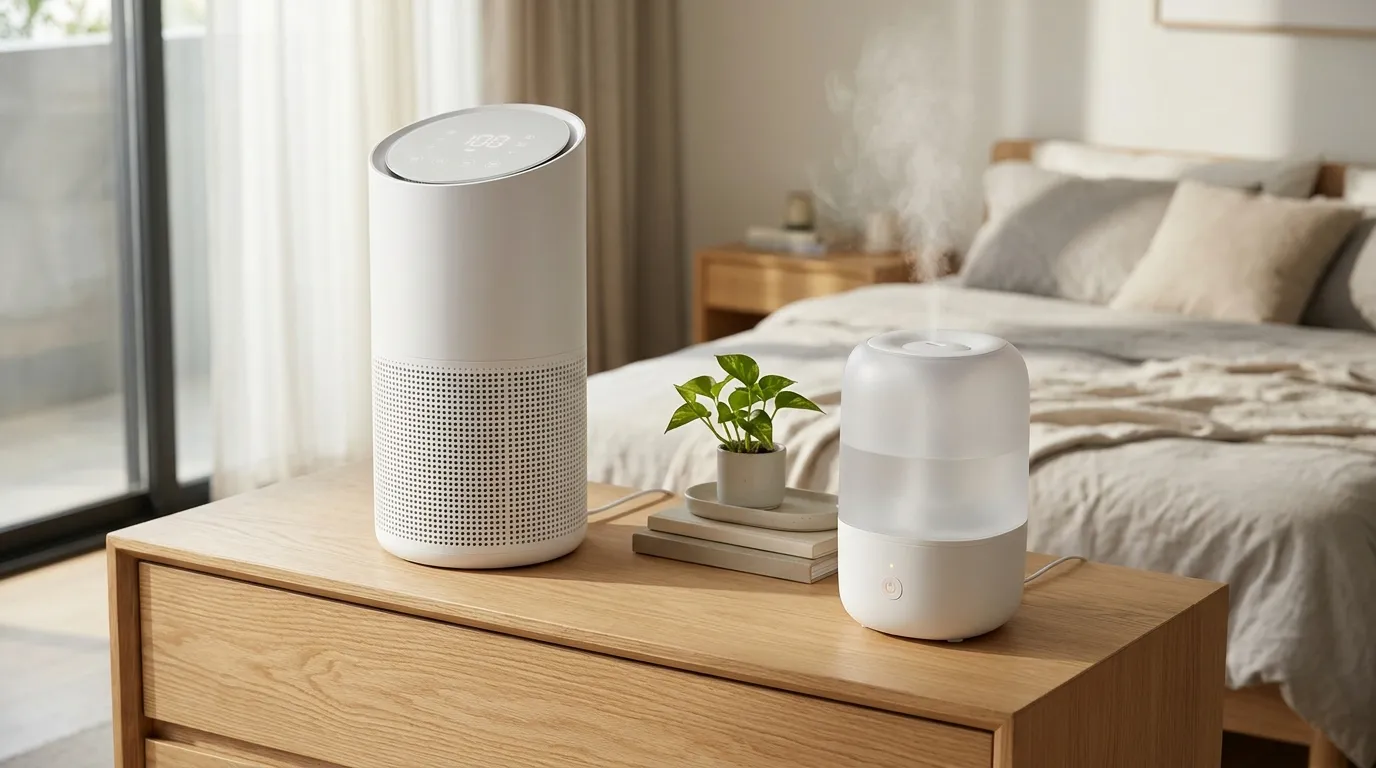
Choosing between these appliances depends on your daily physical symptoms and immediate environmental triggers.
Reach for a Humidifier If You Experience:
- Waking with a Scratchy Throat or Dry Cough: Low humidity dries the protective mucus lining of your respiratory tract, leaving airways raw.
- Frequent Winter Nosebleeds: Fragile blood vessels in the nasal passages crack when ambient air lacks moisture.
- Severe Dry Skin or Eczema Flare-ups: Parched air draws hydration directly out of the epidermis, worsening barrier dysfunction.
- Persistent Static Electricity: Dry air acts as an electrical insulator, making static shocks common throughout the home.
Reach for an Air Purifier If You Experience:
- Seasonal Allergies (Hay Fever): Sneezing, itchy eyes, and congestion driven by outdoor pollen tracked inside.
- Pet Dander Sensitivities: Airborne proteins from cat and dog saliva and skin flakes trigger chronic inflammatory responses.
- Dust Mite and Mold Spore Exposure: Microscopic triggers that stay suspended in household air currents.
- Smoke or Chemical Sensitivity: Cooking fumes, wildfire smoke, and off-gassing from new furniture or paint.
Neither appliance serves as a substitute for the other. Running a humidifier when your bedroom is full of wildfire smoke provides zero filtration benefits. Conversely, operating an air purifier in a dry room will not relieve chapped lips or parched nasal passages.
Common Setup Mistakes and Maintenance Pitfalls
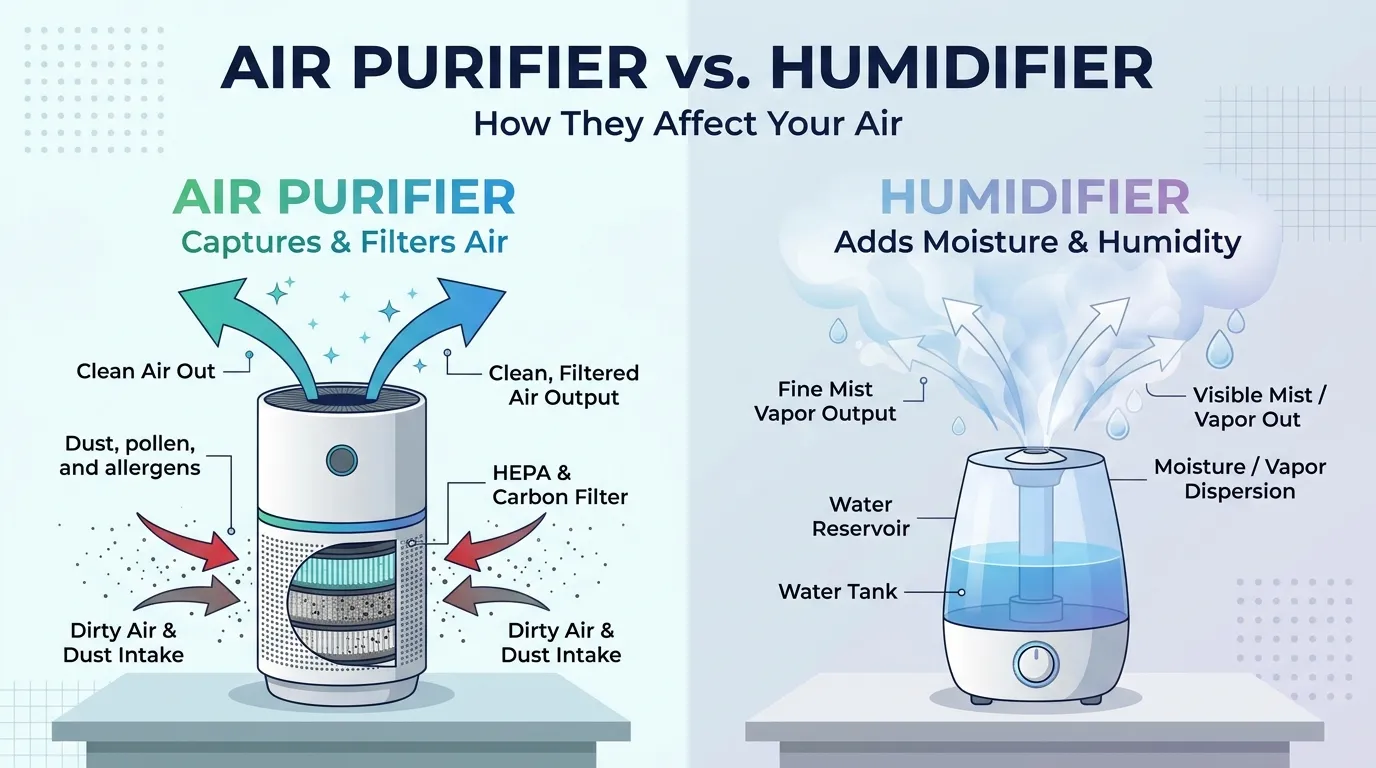
Both appliances require proper placement and regular maintenance to avoid unintended health hazards.
Humidifier Mistakes
- Using Unfiltered Tap Water: Tap water contains dissolved minerals. In ultrasonic humidifiers, these minerals are atomized into a fine “white dust” that settles on surfaces and can irritate sensitive lungs. Use distilled or demineralized water whenever possible.
- Neglecting Reservoir Sanitation: Standing water encourages microbial growth. Clean the basin weekly with white vinegar or a mild hydrogen peroxide solution to prevent blowing mold spores into the room.
- Over-Humidifying the Space: Relative indoor humidity should sit between 30% and 50%. Exceeding 55% creates a prime breeding environment for mold, mildew, and dust mites. Use an inexpensive standalone hygrometer to track room levels.
Air Purifier Mistakes
- Undersizing the Room Capacity: Air purifiers are rated by Clean Air Delivery Rate (CADR). Buying an underpowered unit for a large, open-concept living room means the air will not cycle through the filters frequently enough to reduce particulate loads.
- Ignoring Pre-Filter Buildup: The exterior pre-filter collects pet hair and heavy dust. If it becomes clogged, airflow drops, motor strain increases, and the HEPA filter’s lifespan shortens. Vacuum or rinse the pre-filter monthly.
- Placing Units in Tight Corners: Air purifiers rely on 360-degree intake. Tucking a unit behind heavy curtains or against a sofa restricts circulation and limits room coverage.
Can You Run Both Together? Best Practices for Indoor Air Synergy
Using both devices simultaneously provides significant relief during dry, allergen-heavy seasons, provided you follow simple spacing guidelines.
- Maintain Separation: Keep at least six feet of distance between the humidifier and the air purifier. If a humidifier’s mist blows directly into an air purifier, the moisture can saturate the HEPA paper and carbon filters. Wet filters quickly develop mildew and lose their electrostatic charge, rendering them ineffective.
- Prioritize Breathing Zones: Position your air purifier closer to active sources of contamination (such as pet beds or entryways) or near your nightstand for overnight filtration. Position the humidifier several feet away from the bed on an elevated, water-resistant surface to allow the mist to evaporate before hitting the floor.
- Coordinate Automation: If you use smart plugs or integrated smart home ecosystems, set your humidifier to shut off automatically when room humidity reaches 45%, while keeping the air purifier running on a low, continuous baseline speed to maintain consistent air exchange.
Frequently Asked Questions
Can an air purifier help with a dry throat?
No. Air purifiers capture airborne particles like pollen, dust, and dander, but they do not alter moisture levels. If dry throat or nasal irritation is caused by low relative humidity (especially during winter or in arid climates), a humidifier is required to restore moisture balance.
Does an air purifier remove odors better than a humidifier?
Yes. Humidifiers have no odor-removal capabilities, and excessive moisture can actually intensify musty smells. Air purifiers equipped with an activated carbon filter capture volatile organic compounds (VOCs), cooking smells, pet odors, and smoke particles.
Can I buy a combo 2-in-1 humidifier and air purifier?
Combo units exist, but standalone devices usually perform better. Combination units often feature smaller water reservoirs and reduced filter surface areas. They also carry a higher risk of mold forming on the air filter if the internal water chamber is not rigorously maintained. For most homes, separate dedicated units offer superior CADR ratings and easier cleaning routines.