Executive Summary
- The Porous Problem: Food-grade silicone is highly durable but naturally microscopic and porous, meaning it easily absorbs food oils and strong odors like onions, garlic, and marinades.
- Heat & Acid are Key: Standard dish soap often isn’t enough; neutralizing odors requires acidic agents (like vinegar or lemon), absorbing agents (like baking soda), or targeted heat.
- Proper Drying is Crucial: To prevent musty odors and mold, silicone bags must be completely propped open to air-dry before storage.
Why Silicone Food Bags Retain Stubborn Odors
Silicone has revolutionized zero-waste food storage. It is flexible, temperature-resistant, and infinitely reusable. However, many users notice that after storing spaghetti sauce, curries, or garlicky leftovers, their bags retain a stubborn, unpleasant scent even after a thorough wash.
This happens because food-grade silicone is polymer-based. While it feels completely smooth to the touch, on a molecular level, it is porous. When heated or exposed to fats and oils, these pores expand slightly, trapping microscopic food particles and volatile organic compounds (the molecules responsible for smell) inside the material. To clean silicone food bags remove smell, and restore their fresh state, you need to draw these trapped molecules out rather than just washing the surface.
Step-by-Step Deep Cleaning and Sanitizing Process
To keep your reusable bags hygienic, they need regular sanitizing alongside routine dishwashing.
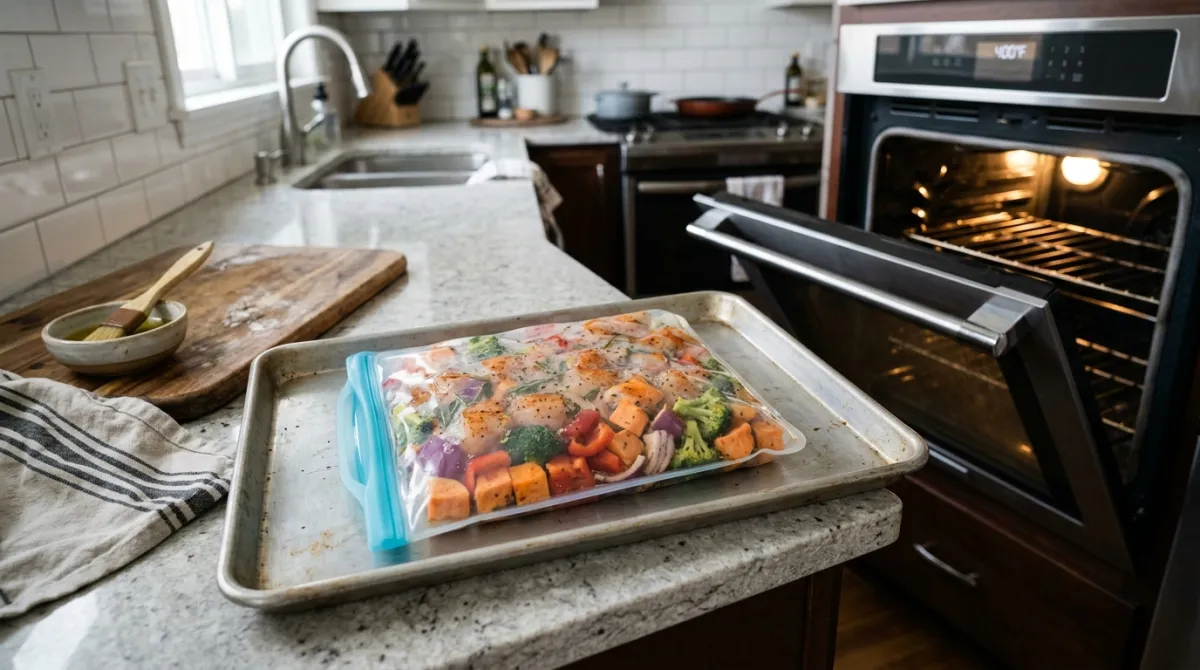
Follow this straightforward routine to deep clean and sanitize your bags:
- The Initial Wash: Turn the bag inside out. Wash it with warm, soapy water using a non-abrasive sponge. Avoid metal scrubbers or harsh scouring pads, which can create micro-scratches that harbor bacteria.
- The Boiling Water Bath: To sanitize, submerge the clean silicone bags in a pot of boiling water for 5 to 10 minutes. Because food-grade silicone has high heat tolerance, this process kills surface bacteria and coaxes the pores open to release trapped oils.
- The Dishwasher Method: Most high-quality silicone bags are dishwasher safe. Secure them on the top rack, completely expanded and facing downward over the tines. Run a hot sanitizing cycle.
Natural Methods to Eliminate Trapped Smells
If a standard sanitize cycle still leaves your bags smelling like yesterday’s lunch, it is time to deploy natural, food-safe odor neutralizers.
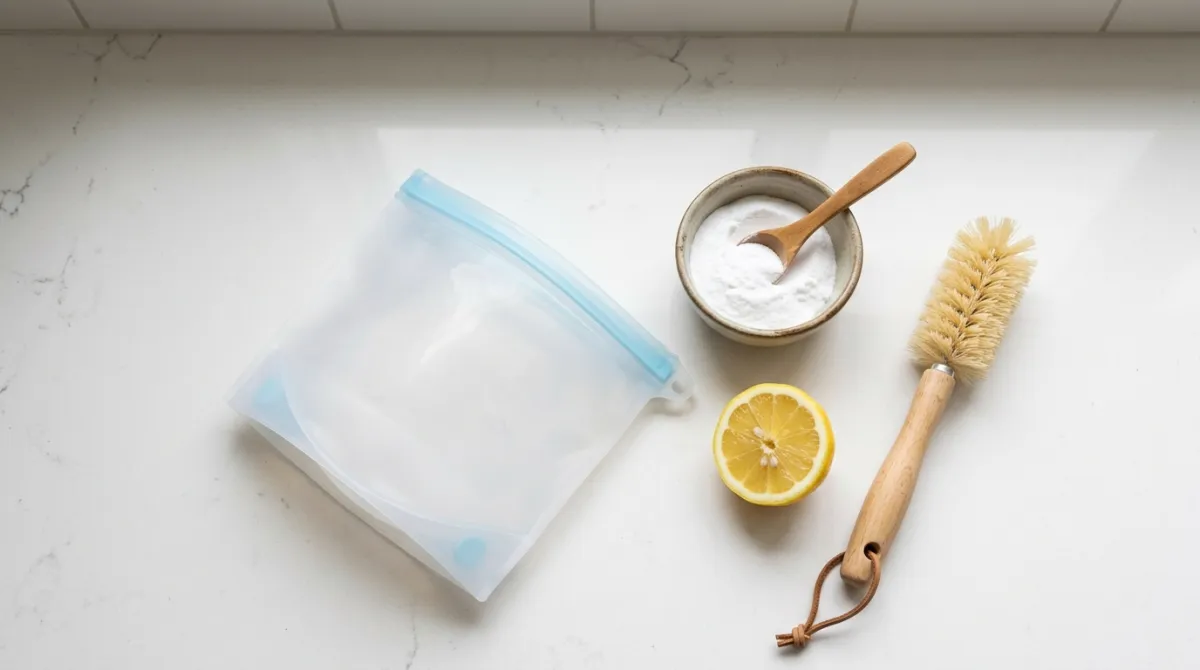
The Baking Soda Paste Method
Baking soda is a natural deodorizer that excels at absorbing acidic odor molecules.
- Mix equal parts baking soda and warm water to form a thick paste.
- Spread the paste generously over the entire inside of the bag.
- Let it sit for at least 2 to 4 hours (or overnight for heavy odors).
- Rinse thoroughly with warm water.
The Vinegar Soak
Distilled white vinegar breaks down residual oils and neutralizes alkaline odors.
- Fill a large bowl with equal parts warm water and white vinegar.
- Submerge the silicone bags completely.
- Let them soak for 30 minutes to an hour.
- Wash with mild dish soap and rinse.
The Oven Bake-Off (For Extreme Odors)
Because silicone is highly heat-resistant, you can use dry heat to bake out stubborn aromas. Always check the manufacturer’s guidelines first to confirm your specific brand’s temperature limits.
- Preheat your oven to 350°F (177°C).
- Thoroughly wash the bag to ensure no grease remains on the surface.
- Place the empty bag upright on a clean baking sheet.
- Bake for 20 to 30 minutes. The heat will cause the silicone to expand and release the trapped gas molecules.
- Let the bag cool completely before handling.
Common Mistakes that Damage Silicone Bags
While silicone is incredibly tough, certain habits can shorten its lifespan or make odor retention worse.
- Using Scented Dish Soap: Highly fragranced dish soaps can actually transfer their perfume oils directly into the silicone pores, leaving your food tasting like artificial lavender or citrus. Opt for unscented, dye-free dish soaps.
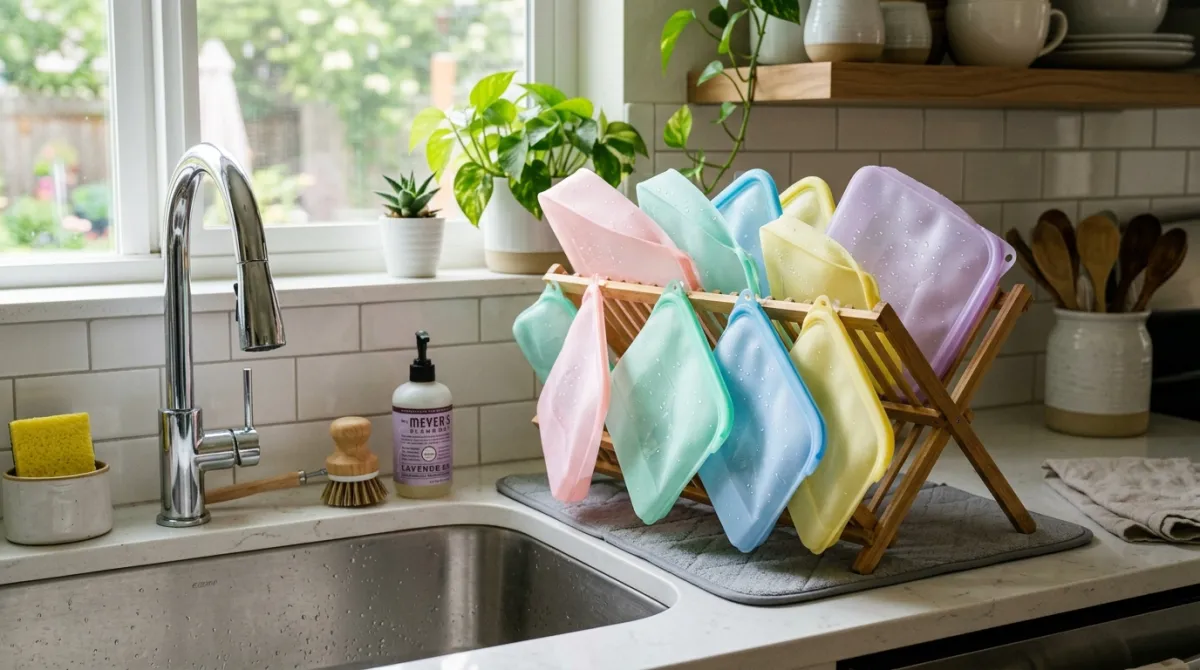
- Storing Bags Closed and Damp: Trapping moisture inside a sealed bag is a recipe for mildew and musty smells. Always prop bags open on a drying rack, a clean bottle, or a dedicated silicone bag drying stand until they are bone dry.
- Using Harsh Chemical Bleaches: Bleach can degrade the silicone polymer over time, making it sticky, brittle, and more prone to tearing. Stick to vinegar, baking soda, and boiling water.
Frequently Asked Questions
Can you put silicone food bags in the dishwasher?
Yes, most high-quality silicone food bags are dishwasher safe. Place them on the top rack, ensuring they are propped wide open over the rack’s prongs so water and detergent can spray inside. Avoid high-heat drying cycles if your brand advises against it.
How do you dry silicone bags quickly to prevent mold?
The fastest way to dry silicone bags is to prop them upside down over a clean drinking glass, a wooden spoon in a jar, or a specialized drying rack. Placing them in a well-ventilated area or near a sunny window speeds up the process. Never store them away until they are completely dry inside.
Why do my silicone bags smell like soap?
Silicone easily absorbs the synthetic fragrances found in standard dish soaps. If your bags smell like soap, it is likely because they were washed with a highly scented detergent. You can remove this soap smell by boiling the bags in plain water for 10 minutes or baking them in the oven at 350°F for 20 minutes.