Disclosure: ClearPick Digest is supported by its readers. If you buy through links on this page, we may earn a commission at no extra cost to you. Read our affiliate disclosure.
Executive Summary
- Adopt the 5-4-3-2-1 Capsule Rule: Build your outfit rotation around interchangeable, moisture-wicking neutrals to maximize daily combinations without packing bulk.
- Leverage Dual-Sided Compression: High-density compression packing cubes cut apparel volume by up to 40% while automatically separating clean and dirty garments.
- Transit Bulky Items First: Wear your heaviest outer layer and primary walking shoes on the plane to keep your bag well under standard airline weight limits.
Selecting the Right Luggage Architecture
Successfully fitting seven days of apparel and gear into overhead storage requires the right balance of volume, structure, and accessibility. Standard domestic and international carry-on dimensions generally hover between 21 and 22 inches in height, yielding an internal capacity of roughly 35 to 45 liters.
When choosing between a hardside spinner and a technical travel backpack, consider your transit style:
- Hardside Spinners: Ideal for city breaks and airport-to-hotel transitions. Rigid polycarbonate shells protect fragile items and toiletries, but external compression is impossible, and interior divider zippers consume minor volume.
- Technical Travel Packs: Built from high-denier recycled nylon, soft-sided travel packs fit easily into irregular overhead bins and regional airline sizers. Padded harness systems offer superior mobility over cobblestones, trailheads, and multi-flight connections.
Opt for luggage featuring lockable YKK zippers, dedicated laptop sleeves situated close to the back panel for ergonomic weight distribution, and durable exterior grab handles.
The 5-4-3-2-1 Capsule Wardrobe for Seven Days
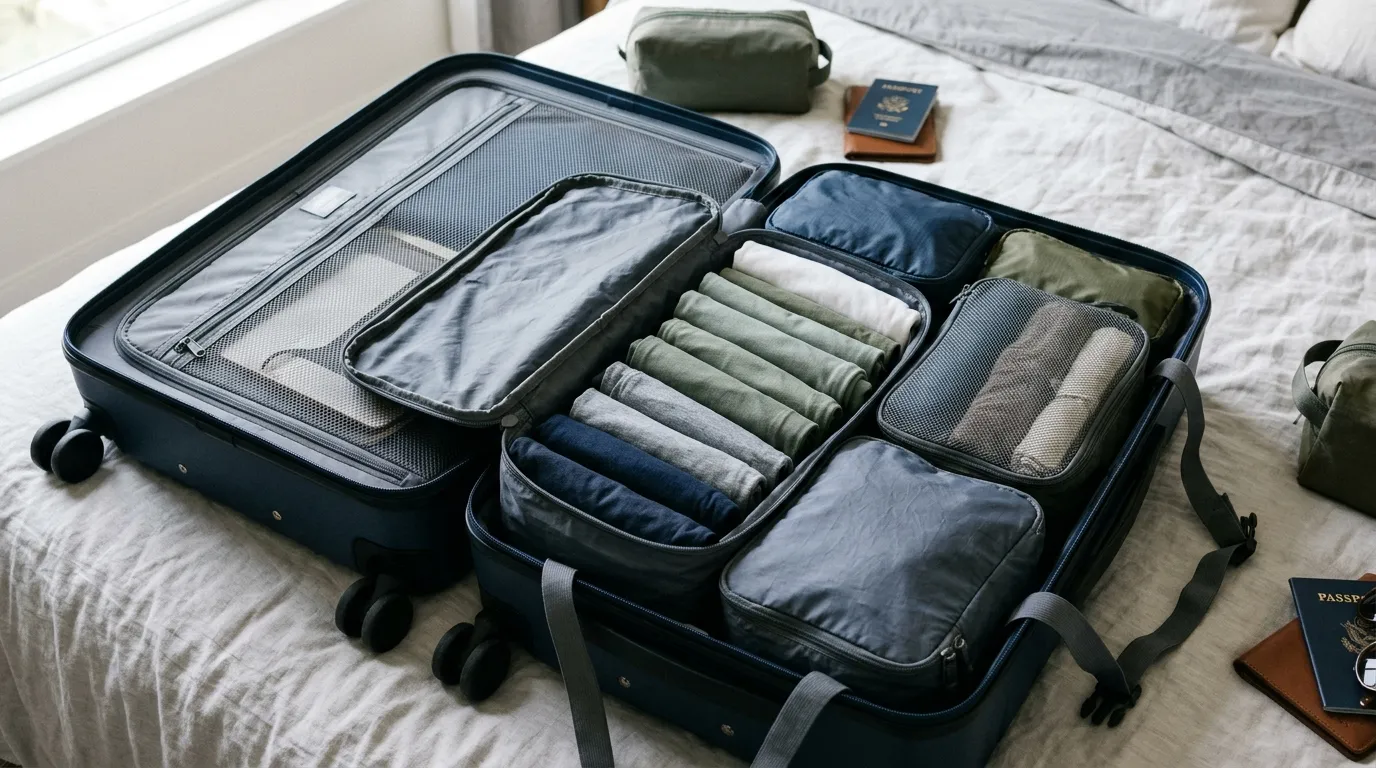
The primary reason travelers run out of room is packing individual outfits for distinct days rather than curating a cohesive capsule. To successfully pack carry on one week trip itineraries, stick to a modular apparel formula based on a unified color palette (such as navy, olive, gray, and black).
The Weekly Formula:
- 5 Tops: A mix of three performance tees (merino wool or odor-resistant synthetic blends), one collared shirt or blouse, and one lightweight long-sleeve layer.
- 4 Bottoms: One pair of durable technical trousers, one pair of tailored casual pants, one pair of active shorts or athleisure bottoms, and whatever you wear during travel (typically jeans or structured joggers).
- 3 Functional Layers/Accessories: A light mid-layer (fleece or packable cardigan), a compact rain shell, and minimal accessories (one belt, neutral scarf, or cap).
- 2 Pairs of Shoes: One supportive pair for walking or hiking (worn during transit), and one low-profile pair (loafers, flats, or packable trail runners) nested in your bag.
- 7 Days of Undergarments: Underwear and socks take negligible space. Never sacrifice baseline hygiene; pack full rotations of moisture-wicking socks and quick-drying briefs.
Merino wool shines on multi-day itineraries because its natural lanolin resists odor-causing bacteria, allowing you to re-wear tops twice before laundering without compromise.
Compression Mechanics: Cubes vs. Ranger Rolling
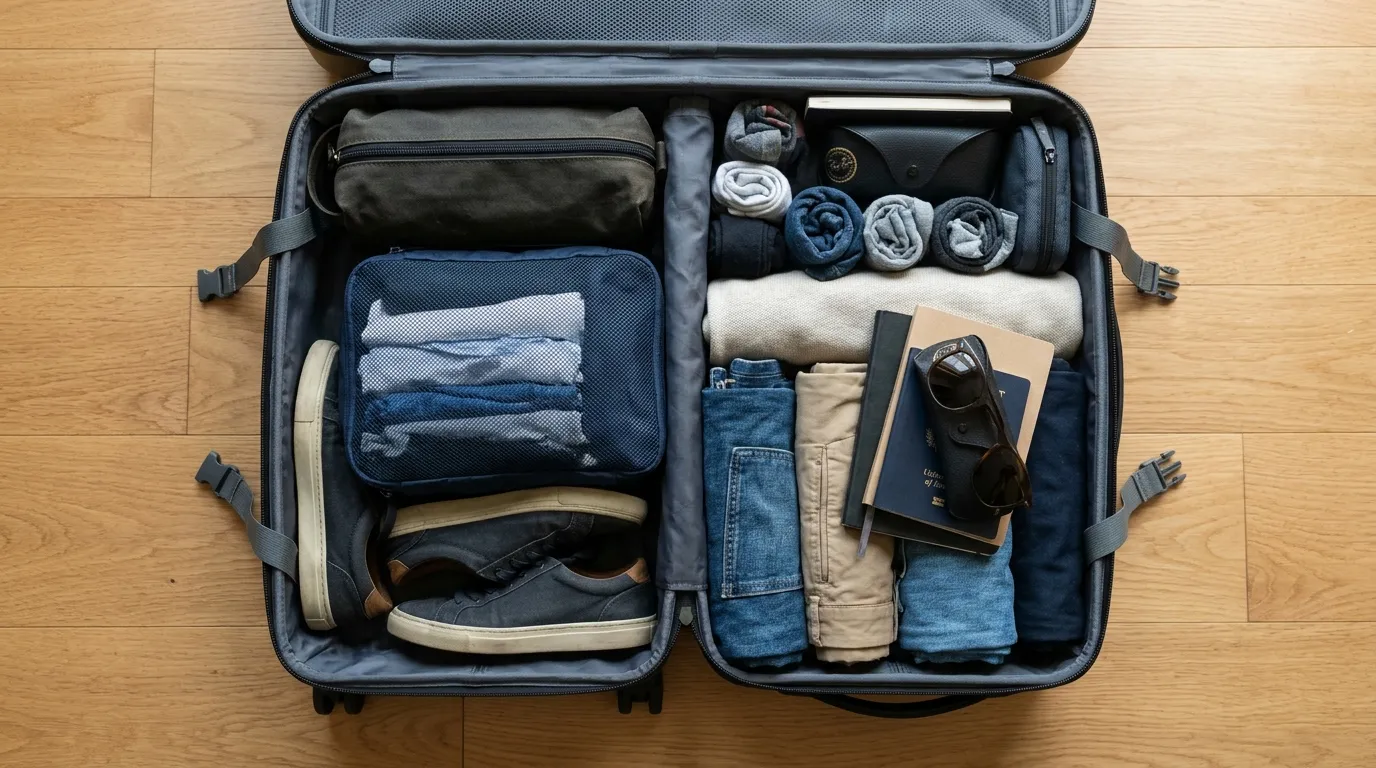
Traditional flat folding introduces empty air pockets between garments, quickly exhausting carry-on depth. Combining the military “Ranger Roll” with dual-zipper compression cubes yields the highest volume savings.
How to Maximize Interior Volume:
- The Roll Technique: Fold the garment lengthwise, smoothing out wrinkles by hand. Tightly roll from the hem upward into a compact, self-contained cylinder. This minimizes creases while keeping individual items easy to identify.
- Compression Cube Integration: Arrange rolled garments inside a compression cube by weight. Fasten the main compartment zipper first, then close the secondary perimeter zipper to mechanically squeeze out trapped air.
- Weight Distribution: Place heavier items—such as packed shoes, dopp kits, and spare electronics—at the bottom of your bag (near the wheels or bottom base). This keeps the luggage stable and prevents it from toppling over when standing upright.
Use a dedicated water-resistant pouch for swimsuits or damp rain gear to isolate moisture from the rest of your dry wardrobe.
Streamlining Toiletries, Tech, and Non-Essentials
Security screening bottlenecks and overstuffed personal items often trace back to uncurated accessories. Streamline your non-clothing footprint using intentional modularity.
- Transition to Solids: Replace liquid shampoos, body washes, and facial cleansers with concentrated solid bars. Doing so bypasses liquid volume caps entirely and removes the risk of cabin-pressure leaks inside your clothes.
- Consolidate Cables: Ditch individual wall warts in favor of a single multi-port GaN (Gallium Nitride) charger capable of handling your phone, e-reader, and laptop simultaneously. Pair it with two universal braided charging cables.
- Eliminate “Just-In-Case” Gear: If an item serves only one hyper-specific scenario that has a low probability of happening, leave it behind. Most destinations provide immediate access to basic pharmacy goods, umbrellas, and laundry facilities if unexpected needs arise.
Frequently Asked Questions
Can you realistically pack for an entire week in a carry-on without doing laundry?
Yes. Using the 5-4-3-2-1 capsule method, you have enough clean tops and rotating bottoms to construct unique daily outfits for seven days. However, hand-washing quick-dry synthetic socks or merino tees in a hotel sink takes less than five minutes and allows you to travel with an even smaller 30-liter pack.
What is the best way to prevent clothes from wrinkling in packing cubes?
Wrinkling occurs from heat, pressure, and fabric friction. Choose synthetic performance weaves, modal blends, or fine-gauge merino wool over stiff 100% linen or heavy poplin cotton. When rolling garments, smooth out any existing creases before applying tension. If an item develops minor creasing during transit, hang it in the bathroom while taking a hot shower to let the steam release the fibers.
How many pairs of shoes should I bring for a seven-day trip?
Two pairs are the practical maximum for carry-on travel. Wear your heaviest pair (such as hiking shoes, boots, or bulky athletic sneakers) on the plane. Pack your flatter, secondary pair—such as minimalist canvas shoes, sandals, or dress loafers—flat against the luggage perimeter walls with socks tucked inside the footwells to retain their shape.