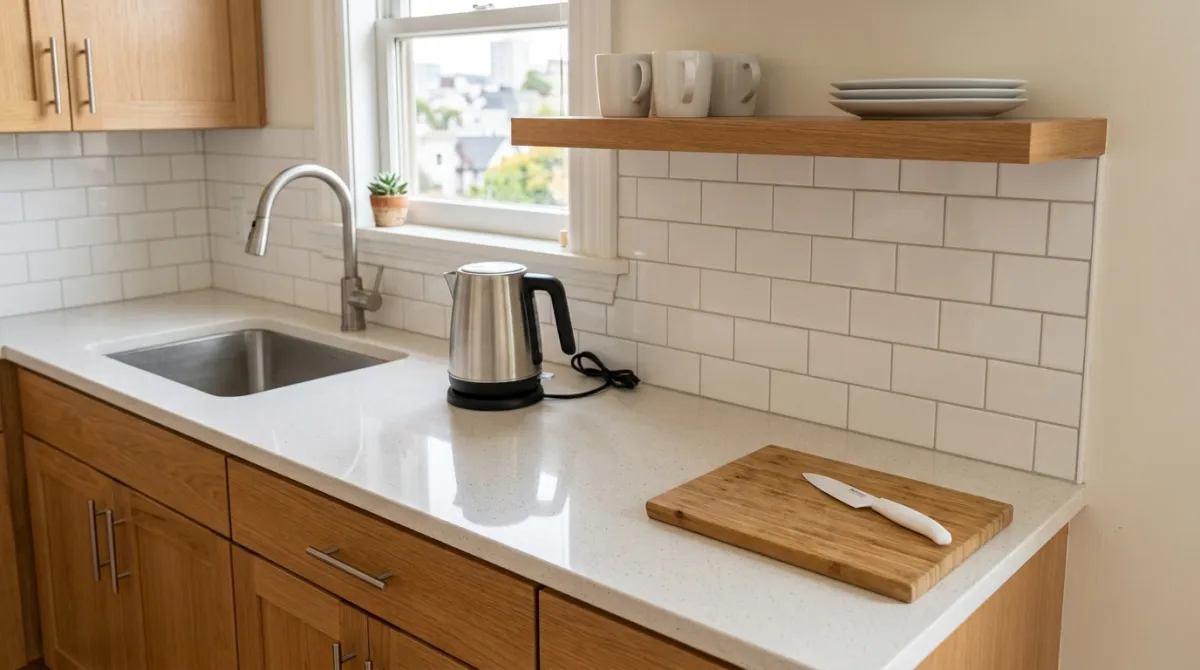
Executive Summary
- The 24-Hour Rule: Only keep appliances on the counter if you use them at least once every 24 hours; everything else belongs in designated storage.
- Go Vertical & Deep: Maximize underutilized spaces like deep pull-out drawers, vertical pantry shelving, and appliance garages to keep bulky items out of sight.
- Consolidate and Streamline: Replace single-purpose gadgets with high-quality multi-functional appliances to cut down on physical footprint and cord chaos.
The “Daily Use” Audit: Deciding What Stays and What Goes
The biggest hurdle to successful small kitchen counter appliance organization is emotional attachment to underutilized gadgets. Before buying organizers or shifting shelves, you must conduct a rigorous appliance audit.
To start, categorize your appliances into three tiers:
- Tier 1 (Daily Essentials): The coffee maker, toaster, or microwave. These earn a permanent spot on the counter because moving them daily creates friction in your routine.
- Tier 2 (Weekly Workhorses): The blender, food processor, or air fryer. These should be stored in easily accessible lower cabinets or pull-out pantries.
- Tier 3 (Seasonal/Occasional): The stand mixer, waffle maker, or chocolate fountain. These belong on top shelves, in deep closets, or even in out-of-kitchen storage (like a utility closet).
By strictly enforcing this hierarchy, you immediately reclaim up to 50% of your counter space. If you haven’t used an appliance in the last three months, consider selling or donating it to free up prime kitchen real estate.
Vertical and Hidden Storage Solutions for Small Kitchens
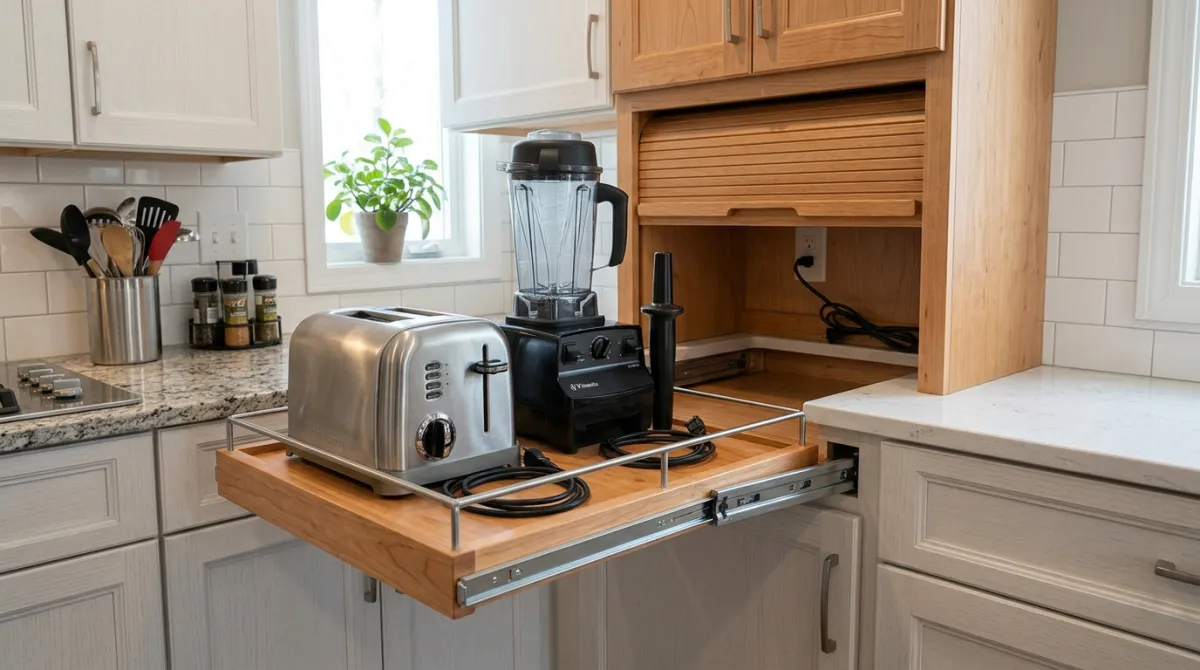
When counter space is at a premium, look up and look deep. Standard base cabinets often become graveyard zones for mismatched Tupperware, but they can easily be retrofitted to house heavy appliances.
Roll-Out Trays and Deep Drawers
Standard lower cabinets require you to get on your hands and knees to retrieve heavy items. Installing aftermarket roll-out wooden trays or heavy-duty wire baskets transforms these dark caverns into accessible storage. Store your heaviest Tier 2 items—like slow cookers and food processors—here so you can lift them safely.
The Appliance Garage
If you are remodeling or have a flexible budget, consider adding an appliance garage. These are counter-level cabinets with roll-up (tambour) doors or pocket doors. They allow you to keep your coffee station or toaster plugged in and ready to use, but completely hidden from view when guests arrive.
Floating Shelves and Wall Mounts
Don’t ignore empty wall space. Heavy-duty floating shelves can hold aesthetically pleasing appliances like stand mixers. Microwaves can also be mounted under upper cabinets or built into a kitchen island to lift them off the main prep area.
Multi-Functional Appliances: The Ultimate Space Savers
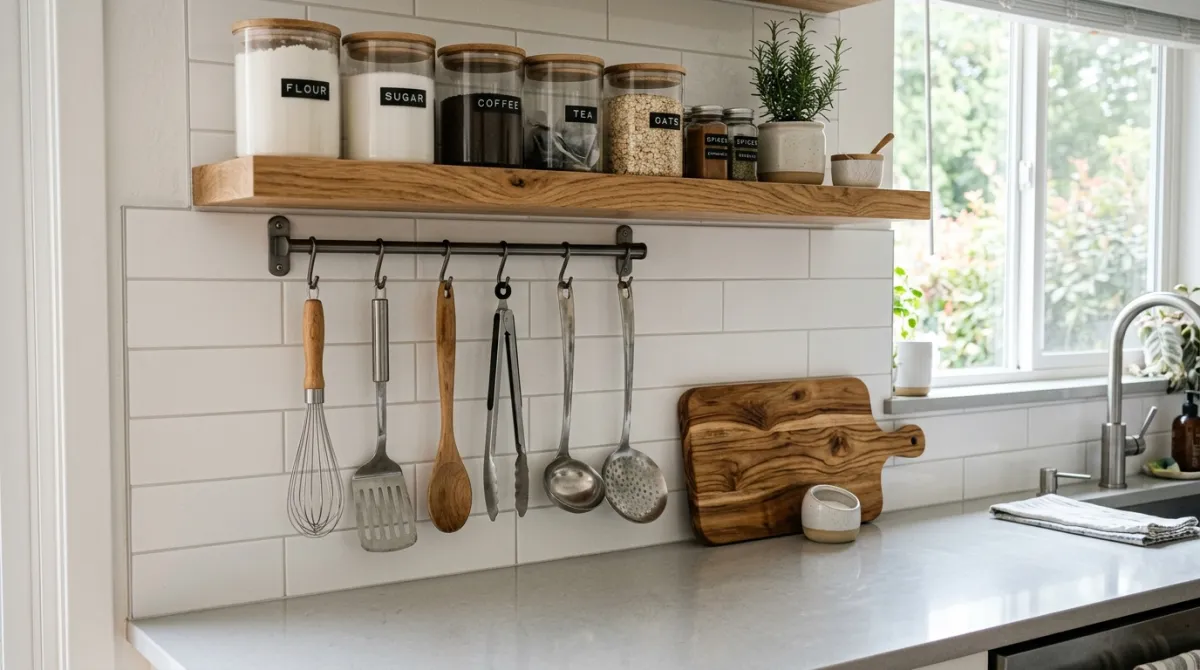
One of the easiest ways to fail at small kitchen counter appliance organization is trying to store too many single-use gadgets. The modern kitchen market has shifted toward high-performance, multi-functional units that do the job of three or four machines.
Consider making the following swaps to save space:
- The Toaster Oven / Air Fryer / Convection Combo: Instead of a standalone toaster, an air fryer, and a dehydrator, invest in a single premium countertop oven that handles all of these functions.
- The Multi-Cooker: A single high-quality multi-cooker can replace a slow cooker, pressure cooker, rice cooker, and yogurt maker.
- High-Performance Immersion Blenders: Instead of a bulky countertop blender and a separate hand mixer, a high-end immersion blender with whisk and food-chopper attachments can handle 90% of daily mixing, pureeing, and chopping tasks while fitting neatly into a drawer.
When shopping for multi-functional appliances, always check the manufacturer’s dimensions and clearance requirements to ensure they fit comfortably under your upper cabinets.
Visual Tricks and Cord Management to Reduce Mental Clutter
Sometimes, a counter isn’t actually crowded, but it looks messy. Visual clutter contributes significantly to the feeling of a cramped kitchen. Addressing the small details can make a massive psychological difference.
Tame the Cord Chaos
Dangling, tangled cords are the enemy of a clean kitchen. Use adhesive cord wrappers on the back of every countertop appliance. These small, inexpensive plastic tabs stick to the machine, allowing you to wind the power cord tightly out of sight when the appliance is not in use.
Group Items on Trays
If you must keep multiple small items on the counter (such as a coffee grinder, syrup bottles, and a sugar bowl), group them together on a low-profile wooden, marble, or ceramic tray. Visually, the human brain registers a tray of items as a single “object” rather than five separate pieces of clutter.
Match Your Color Palette
If you are purchasing new appliances, try to match their finish to your kitchen’s color scheme. Stainless steel blends seamlessly with modern designs, while matte black or white appliances can visually recede into matching backsplashes, making the counters feel wider and more open.
Frequently Asked Questions
Where do you put appliances in a kitchen with no counter space?
If you have virtually zero counter space, look outside the traditional kitchen footprint. Utilize adjacent spaces like a dining room sideboard, a rolling bar cart, or a pantry utility cart. Rolling kitchen carts with butcher-block tops are excellent because they provide both storage underneath and an extra prep surface on top that can be wheeled away when not in use.
How do you hide kitchen appliances on the counter?
The best way to hide appliances on the counter is by using an appliance garage or a appliance cover that matches your kitchen decor. Alternatively, you can place decorative items—like a large wooden cutting board or a beautiful ceramic vase—in front of smaller appliances to block them from direct line of sight.
What is the golden rule of kitchen counter organization?
The golden rule is “Clear counters equal a clear mind.” Keep nothing on the counter that is not used daily. If an item requires you to move another object out of the way to use it, your layout needs adjustment. Prioritize workflow, accessibility, and prep space over convenience storage.