Disclosure: ClearPick Digest is supported by its readers. If you buy through links on this page, we may earn a commission at no extra cost to you. Read our affiliate disclosure.
Executive Summary
- Never mix chemicals: Descale with undiluted distilled white vinegar first, rinse thoroughly, and only then disinfect with hydrogen peroxide or diluted bleach if necessary.
- Dismantle completely: Mold colonies conceal themselves under silicone gaskets, inside mist nozzles, and within base reservoirs where water pools undisturbed.
- Air dry entirely: Mechanical scrubbing removes active spores, but letting components sit completely dry in direct sunlight or circulating air prevents regrowth.
Why Humidifiers Breed Mold and What Supplies You Need
A humidifier combines three factors that fungal spores require to thrive: stagnant moisture, room temperature warmth, and porous mineral deposits that serve as microscopic anchors. When hard tap water evaporates or nebulizes into mist, it leaves behind calcium and magnesium scale. This crusty white residue—often called scale or lime—traps bacteria and black or pink mold (Rhodotorula rubra), turning your wellness device into a spore dispersion system.
Knowing how to clean humidifier mold effectively means understanding the chemistry of your supplies:
- Distilled White Vinegar: Acetic acid dissolves calcium carbonate scale and softens fungal filaments.
- 3% Hydrogen Peroxide: An oxygen-based antimicrobial agent that kills residual mold spores without leaving behind caustic vapors.
- Soft-Bristled Detail Brush or Clean Toothbrush: Necessary for agitating corners, float valves, and ultrasonic nebulizer discs.
- Microfiber Cloths: Lint-free wiping tools that capture lifted biofilm without scratching soft plastics.
- Distilled Water: For final rinses and routine operation to prevent rapid re-mineralization.
Avoid harsh industrial cleaners, synthetic scented soaps, or concentrated aerosol disinfectants. Plastics absorb fragrances and chemical residues, which your machine will later vaporize directly into your lungs.
Step-by-Step Protocol: How to Clean Humidifier Mold Safely
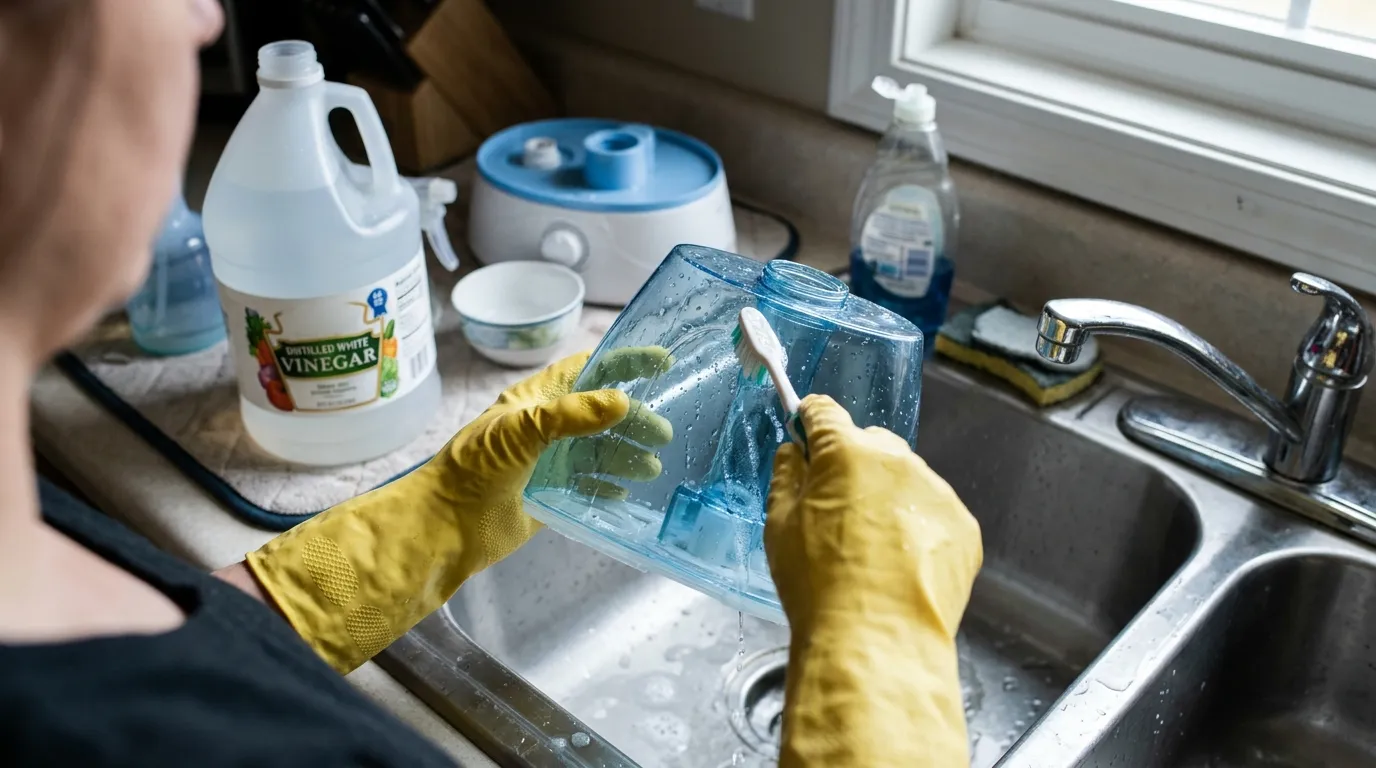
Follow this two-phase sequence: first descale to strip the physical shield, then disinfect to eliminate fungal spores at a cellular level.
1. Power Down and Strip the Unit
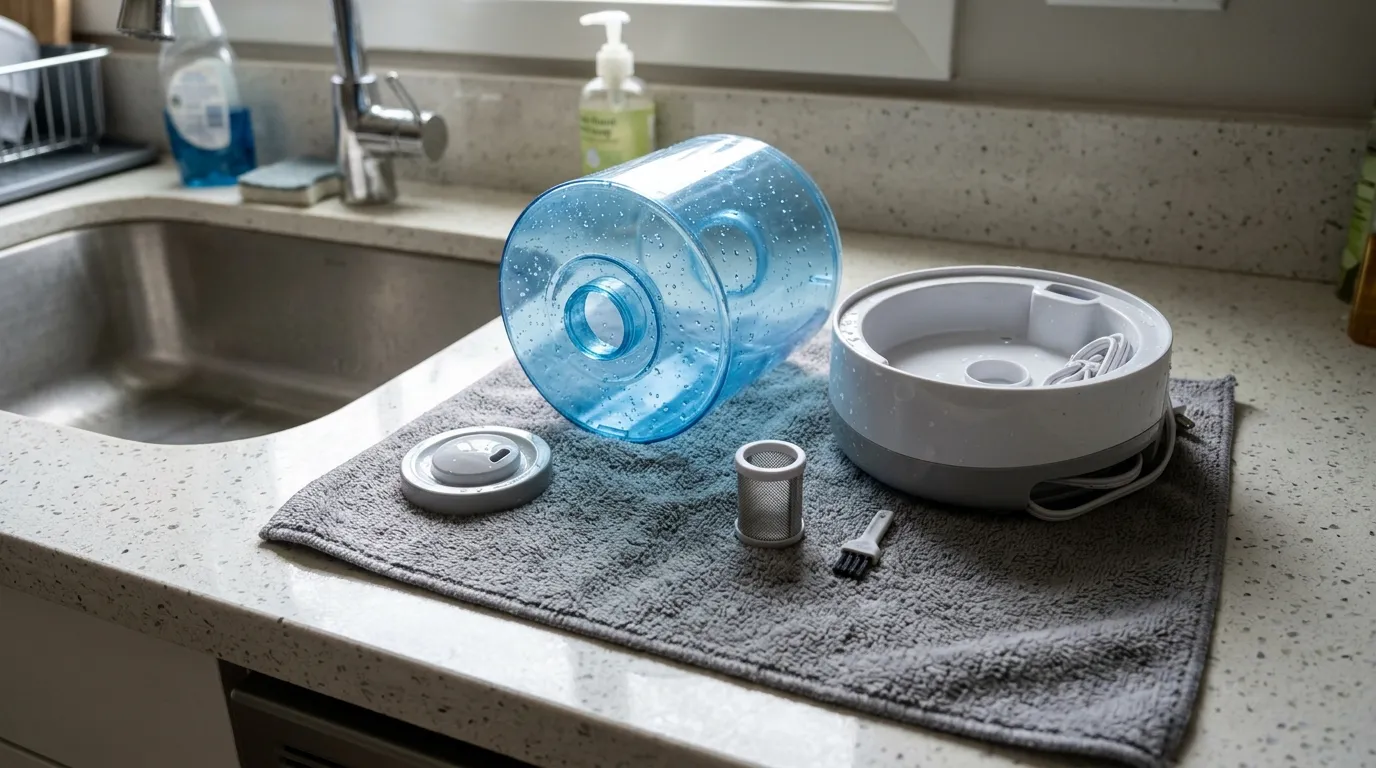
Unplug the power adapter from the wall. Empty all standing water from the reservoir and base basin immediately down the drain. Disassemble every detachable component: tank cap, silicone sealing rings, mist nozzle, air directional vents, and water filters or demineralization cartridges (rinse or discard filters according to manufacturer guidelines).
2. Dissolve the Mineral Crust (Vinegar Soak)
Fill the water reservoir halfway with undiluted white distilled vinegar. Pour enough vinegar into the bottom basin to submerge the ultrasonic plate and any crevices. Swirl the liquid to wet the interior walls.
- Let the components soak undisturbed for 30 to 45 minutes.
- Use your soft toothbrush to gently scrub the recessed corners, silicone seatings, and the metal vibrating disc. Never scrape the disc with metal tools.
- Rinse every component under running tap water until all traces of vinegar smell are gone.
3. Disinfect to Kill Residual Spores (Hydrogen Peroxide Soak)
Scale removal reveals the base plastic where spores cling.
- Pour a fresh batch of 3% hydrogen peroxide into the base and reservoir (or a solution of one teaspoon of plain liquid chlorine bleach per gallon of water).
- Swish the solution to coat all inner surfaces and let it sit for 20 minutes.
- Safety note: Never combine vinegar and bleach; the chemical reaction generates toxic chlorine gas. Complete the vinegar rinse entirely before introducing any secondary sanitizing agent.
4. Final Rinse and Air Curing
Rinse every part repeatedly with clean tap or distilled water until no chemical scent remains. Shake off excess drops and lay all components out on a clean towel in a well-ventilated space to dry completely before reassembly.
Mineral Scale vs. Mold: Diagnosing Buildup Types
Not every discoloration inside your humidifier is an active biological colony. Identifying the buildup helps you apply the correct treatment without degrading your machine’s seals or housing.
| Characteristic | Mineral Scale (Limescale) | Pink Slime (Rhodotorula) | Black / Green Mold (Cladosporium / Aspergillus) |
|---|---|---|---|
| Appearance | Chalky white, gray, or dull off-white crust | Slippery, gelatinous pink or light-orange film | Fuzzy, speckled dark spots or patches |
| Texture | Hard, brittle, rough to touch | Slick, slimy, easily wiped with a finger | Velvety, stubborn, anchored to seams |
| Primary Cause | High mineral content in tap water | Airborne environmental bacteria feeding on soap/mineral scum | Standing water kept warm in dark base crevices |
| Best Treatment | Undiluted white vinegar soak | Diluted hydrogen peroxide (3%) | Hydrogen peroxide scrub + full sun air cure |
| Risk Factor | Clogs mist mechanisms; degrades transducer | Low-grade allergen; irritates sensitive airways | High risk; can trigger respiratory distress and asthma |
Ultrasonic humidifiers produce a cool fog by vibrating a small metal plate at high frequencies. When scale encrusts that plate, energy transfers inefficiently, raising the internal water temperature and accelerating mold growth. Evaporative units, by contrast, use wicking paper filters that catch minerals but can host spore beds if they stay wet in an uncirculated room.
Daily and Weekly Habits to Prevent Regrowth
Deep cleaning solves an existing infestation, but simple maintenance stops mold from recurring.
- Perform the Daily Water Dump: Never top off old water. Empty the basin every morning, wipe the pool dry with a clean cloth, and let the tank sit open during the day.
- Switch to Demineralized or Distilled Water: Tap water feeds scale. Using reverse-osmosis or steam-distilled water eliminates the mineral bed that mold requires to anchor itself.
- Store Completely Bone Dry: If you plan to pack the humidifier away for the season, clean it thoroughly, let it dry in direct air for 48 hours, and seal it with a fresh silica gel packet. Never store a unit with moisture trapped inside the valve seals.
Frequently Asked Questions
Can you run vinegar through a humidifier while it is running?
No. Never turn on or run a humidifier with vinegar or sanitizing chemicals inside the tank. Vaporizing or aerosolizing acetic acid can severely irritate your eyes, nose, throat, and lungs. Always soak components while the unit is unplugged, rinse thoroughly, and run the machine only with clean water.
Why does my humidifier smell musty even after cleaning?
A lingering musty odor usually indicates hidden mold trapped inside non-submerged airflow channels, beneath non-removable base plates, or inside a saturated evaporative wick filter. If your unit uses a paper wick filter, replace it entirely, as fungal mycelium penetrates deep into the fibers where surface sanitizers cannot reach.
How often should you clean a humidifier to prevent mold?
Rinse and refill with fresh water daily. Conduct a thorough vinegar descaling and sanitizing wash once every three to seven days, depending on how frequently the device runs and your local water hardness.