Disclosure: ClearPick Digest is supported by its readers. If you buy through links on this page, we may earn a commission at no extra cost to you. Read our affiliate disclosure.
Executive Summary
- Prioritize your payload: Ultralight backpackers benefit most from BPA-free plastics or flexible TPU flasks, while daily hikers and travelers often prefer the dent resistance of stainless steel or the featherweight strength of titanium.
- Check filtration compatibility: If you plan to drink from backcountry streams, standard wide-mouth threads pair seamlessly with most popular squeeze and pump filters.
- Match bottle profile to your gear: A bottle that slips easily into an airline seatback pocket or backpack side sleeve prevents dropped gear and uneven pack balance.
1. Material Showdown: Stainless Steel, Plastic, or Titanium?
The first decision when you choose a reusable water bottle for hiking is selecting the base material. Every option introduces a specific trade-off between tare weight, thermal performance, and physical resilience.
| Material | Weight | Durability | Temperature Control | Best For |
|---|---|---|---|---|
| BPA-Free Tritan / Plastic | Very Low | Moderate | None (single wall) | Multi-day trekking, fast-and-light day hikes |
| Collapsible TPU | Lowest | Low to Moderate | None | Travel back-up, emergency carry, trail running |
| Single-Wall Stainless Steel | Moderate | High | None (can boil water in emergencies) | Rugged backcountry, bushcraft |
| Vacuum-Insulated Steel | High | Very High | Excellent (hot & cold) | Day hikes, vehicle travel, hot climate exploring |
| Titanium | Extremely Low | Exceptional | None | Ultralight thru-hiking, minimalist gear kits |
Plastic & Flexible Reservoirs
High-grade, BPA-free copolyester (such as Tritan) remains a trail classic because it provides transparency—allowing you to inspect water clarity and volume at a glance—without adding dead weight to your pack. Collapsible TPU reservoirs collapse down flat when drained, making them invaluable for passing through airport security or storing backup liters on dry trail stretches.
Stainless Steel & Double-Wall Insulation
Double-wall vacuum-insulated bottles excel at keeping water ice-cold in desert conditions or preventing tea from freezing on winter ridges. However, that thermal barrier adds considerable mass. If you are climbing steep elevation profiles over long distances, a hefty insulated flask can become a liability. For backcountry trekking, single-wall metal is lighter and can double as a clean boiling vessel in survival scenarios, provided it has no paint or internal plastic liners.
Ultralight Titanium
Titanium delivers the ruggedness of steel at a fraction of the weight. While it commands a premium price, it will not absorb flavors, withstands hard impacts, and offers lifelong durability without the grams associated with traditional metal bottles.
2. Capacity, Volume, and Pack Ergonomics
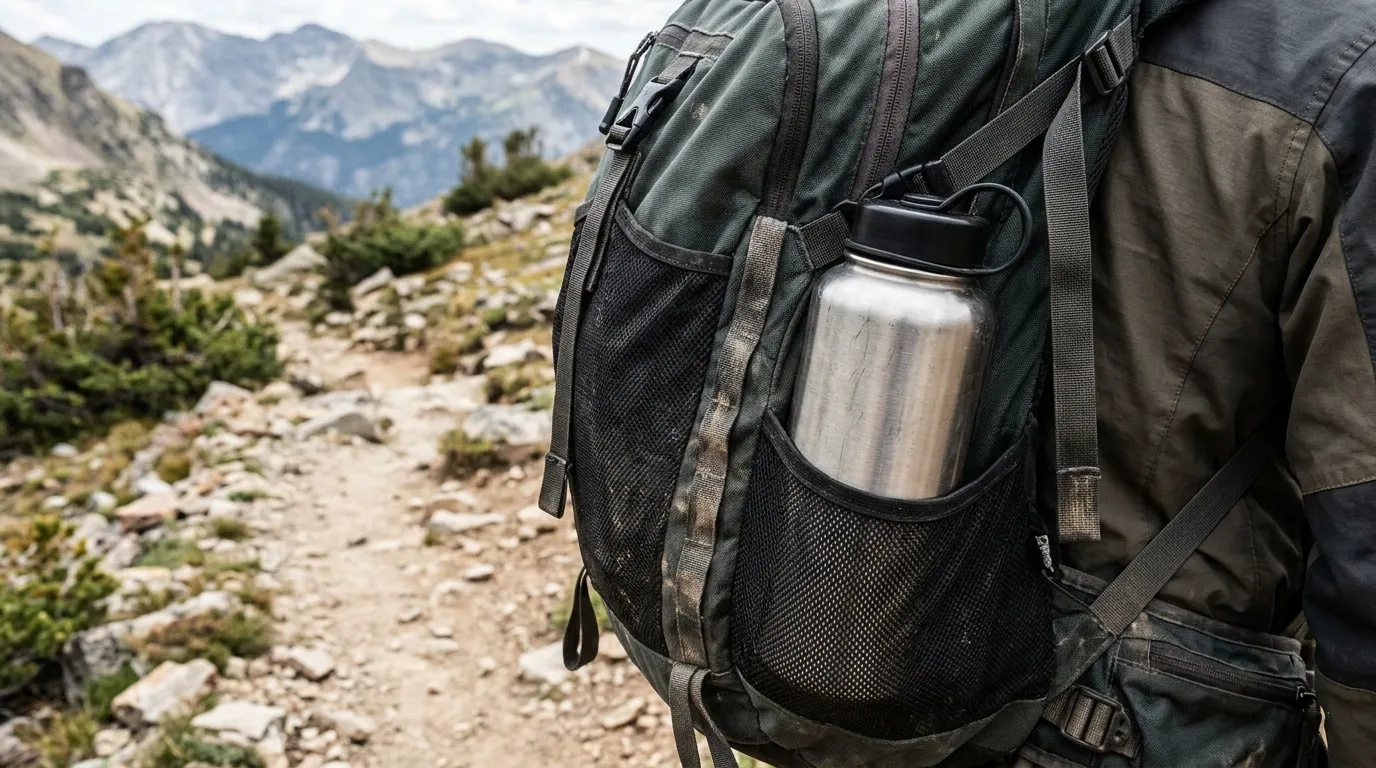
Hydration capacity should align with trail accessibility and local climate rather than a “bigger is always better” mentality. Water weighs exactly one kilogram per liter (approximately 2.2 pounds), making it one of the heaviest components in your pack.
- 0.5 to 0.75 Liters (17–24 oz): Ideal for short urban excursions, airport transit, or trails with guaranteed, frequent potable fill stations.
- 1.0 Liter (32 oz): The gold standard for typical hiking trails. It provides an optimal balance between carrying capacity and side-pocket stability.
- 1.5 Liters and Above: Reserved for arid environments, high-heat desert hikes, or long stretches between reliable water sources.
Beyond capacity, pay close attention to external diameter and profile. A 1-liter bottle that is squat and wide may fail to fit inside standard backpack side mesh pockets, leading to gear falling out when bending over or scrambling across rocks. Look for vessels with a straight, slim taper, or those equipped with secure attachment loops so you can clip a carabiner through the cap to your pack’s compression straps.
3. Cap Designs and Water Filter Compatibility
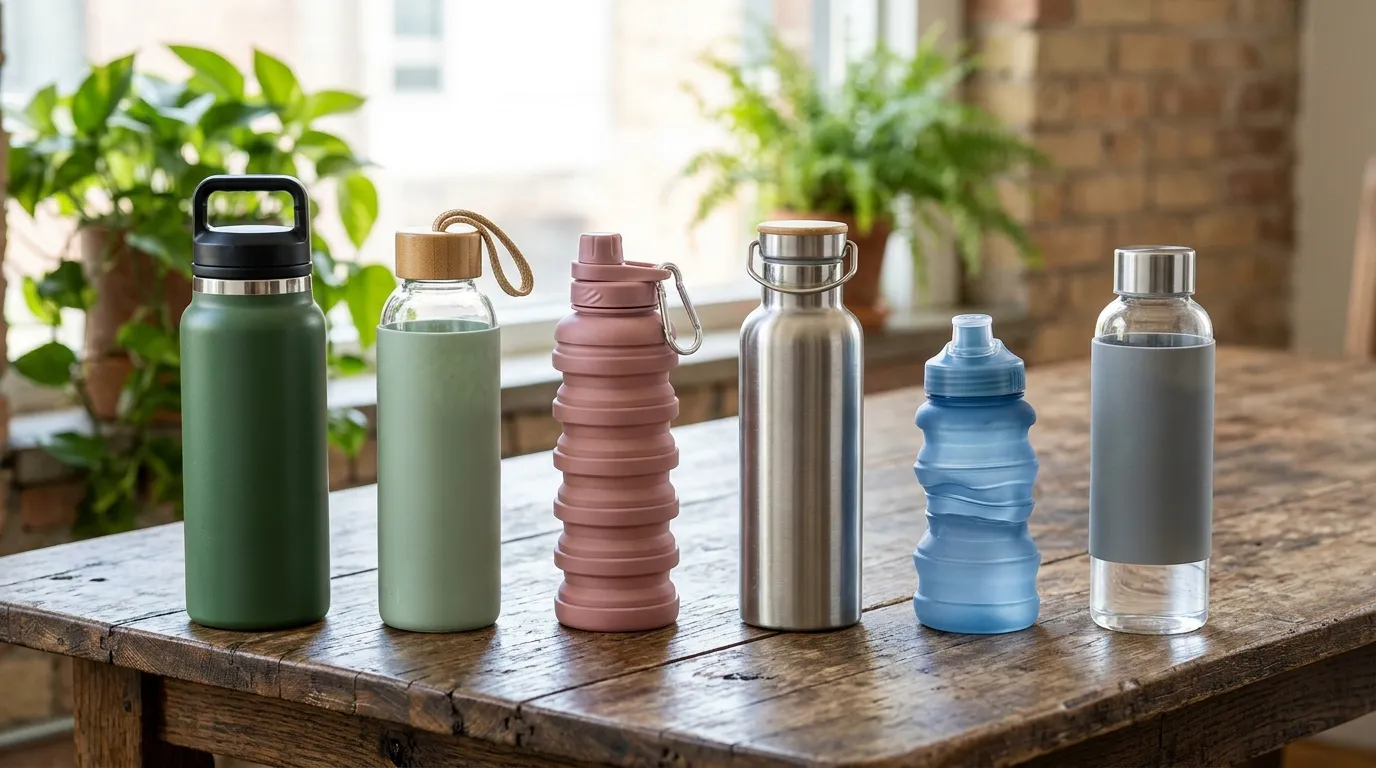
The lid mechanism impacts both daily ease of use and backcountry safety. While complex mechanisms appear convenient, simpler designs usually survive trail use longer.
Wide-Mouth vs. Narrow-Mouth Openings
A wide-mouth opening (typically around 63mm) simplifies filling from shallow natural springs, accepts ice cubes easily, and makes internal scrub cleaning painless. More importantly, most modern backcountry hollow-fiber membrane filters thread directly onto industry-standard wide-mouth openings.
Narrow-mouth bottles are more pleasant to drink from while walking or riding in a vehicle, but they require funnels or adapter tubes to fill from filter units.
Lid Mechanisms: Screw Tops, Straws, and Chugs
- Loop Screw Caps: Virtually bombproof. They contain fewer moving parts, resist sand intrusion, and create a zero-leak seal under cabin pressure changes in aircraft.
- Straw and Bite Valves: Convenient for active sipping, but they rely on silicone gaskets and bite nozzles that collect trail dust, harbor mold if not thoroughly dried, and can leak under ambient pressure shifts.
- Push-Button Spouts: Excellent for one-handed operation during urban commutes, but prone to accidental release if compressed inside a stuffed pack.
4. Common Mistakes When Buying for Trail and Travel
Avoid these frequent pitfalls when narrowing down your selection:
- Over-indexing on thermal insulation for multi-day treks: Carrying a 400-gram empty bottle on a 4-day hike expends unnecessary energy. Save heavy insulated flasks for car camping, front-country day hikes, and rail travel.
- Ignoring maintenance and mold traps: Lids with hidden internal springs, multi-piece valves, or non-removable gaskets are notorious for trapping moisture. Check manufacturer cleaning instructions to ensure all rubber seals can be removed and sanitized.
- Overlooking airport security protocols: Empty rigid bottles travel well through security, but bulkier designs take up permanent volume in personal-item bags. If luggage space is at a premium, pair a standard 750ml daily carry bottle with a rolled-up collapsible flask for reserve capacity.
Frequently Asked Questions
What is the most durable water bottle material for backcountry hiking?
Single-wall stainless steel and titanium offer the greatest structural durability. While high-grade plastic handles typical drops, metal vessels will not crack under freezing conditions or sharp impacts against granite, and they retain functionality even when dented.
How do I know if a reusable bottle fits my backpack’s side pockets?
Most backpack side pockets comfortably fit bottles with a base diameter between 2.75 inches (7 cm) and 3.6 inches (9.1 cm). Check the manufacturer’s listed base dimensions before purchasing, especially for wide 32-ounce or 40-ounce insulated models.
Can I clean my hiking water bottle with boiling water?
Single-wall stainless steel, titanium, and heat-rated Tritan plastics can safely handle boiling water for sanitation. However, avoid pouring boiling water into vacuum-insulated bottles with rubber gaskets or standard collapsible TPU bladders unless the manufacturer explicitly rates them for high temperatures.