Disclosure: ClearPick Digest is supported by its readers. If you buy through links on this page, we may earn a commission at no extra cost to you. Read our affiliate disclosure.
Executive Summary
- Light and temperature drive the transition: Melatonin release relies on declining ambient lux levels and a natural drop in core body temperature during the final hour of your evening.
- Keep the sequence friction-free: An effective evening routine for better sleep should take between 30 and 45 minutes; over-complicated 10-step rituals increase cognitive load instead of reducing it.
- Separation creates closure: Establishing a definitive mental boundary between daytime workspace stress and night rest stops the autonomic nervous system from lingering in a fight-or-flight state.
The Biology of Winding Down: Light, Temperature, and Cortisol
Deep, restorative sleep is not an on-off switch—it is a physiological descent that begins hours before your head hits the pillow. When your evening signals remain high in blue spectrum illumination, task urgency, and cognitive processing, your brain interprets the environment as midday. Cortisol remains elevated, stalling the pineal gland’s secretion of melatonin.
To reverse this state, your evening routine must work in harmony with your circadian biology:
- Light Spectrum Shift: Transitioning from high-intensity overhead LEDs to low-angle, warm-spectrum amber or red lighting signals your suprachiasmatic nucleus that night has arrived.
- Vasodilation: A warm shower or bath about 60 to 90 minutes before bed brings blood flow to your hands and feet. When you step out, heat dumps rapidly, dropping your core body temperature—the exact physiological trigger that induces sleepiness.
- Autonomic Balance: Shifting from sympathetic (alert, problem-solving) to parasympathetic (rest-and-digest) tone requires predictable, non-demanding inputs during the final hour of your waking day.
A 45-Minute Low-Friction Wind-Down Framework
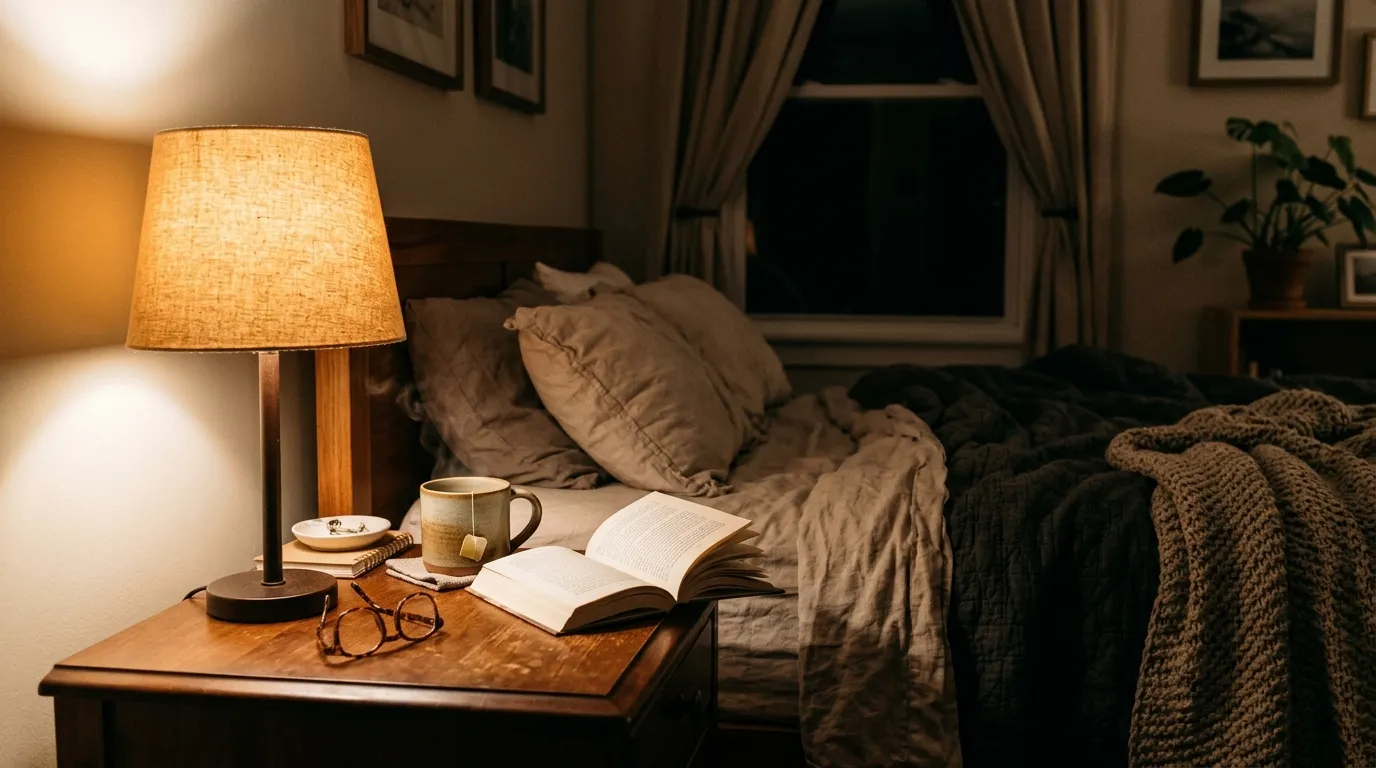
Lengthy rituals often fail because they require too much willpower after an exhausting day. This streamlined three-phase framework delivers maximum autonomic benefits with minimal friction.
Phase 1: The Disconnect (T-45 Minutes)
- Initiate the visual shutdown: Switch off primary overhead lighting in your living space. Switch on warm floor lamps or low-kelvin table fixtures.
- Set physical boundaries on work: Close your laptop, park your phone on a charger outside the bedroom (or across the room), and step away from work-related messaging platforms.
- Log the “Tomorrow List”: Spend three minutes jotting down your top three priorities for the next morning. Externalizing pending tasks on paper prevents cognitive rumination when your head touches the pillow.
Phase 2: The Physical Downshift (T-30 Minutes)
- Engage basic hygiene cues: Brush your teeth, wash your face with warm water, or take a quick warm shower.
- Prep tomorrow’s essentials: Lay out tomorrow’s clothes or fill a water carafe. Removing trivial choices from your morning relieves subconscious late-night planning tension.
- Gentle movement: Perform three to five minutes of light spinal decompression, such as a child’s pose, seated forward fold, or basic calf stretches to release residual physical tension.
Phase 3: The Low-Cognition Buffer (T-15 Minutes)
- Enter the sleep sanctuary: Transition into the bedroom, ensuring illumination is reduced to a soft reading light.
- Analog stimulation only: Read physical book chapters, listen to low-tempo instrumental soundscapes, or practice physiological sighs (two quick inhales through the nose, followed by a long, slow exhale through the mouth).
- Lights out on cue: Do not wait until you are fully asleep to turn off the lamp; power down when heavy eyelids and yawning first manifest.
Optimizing the Sleep Environment: Lighting, Air, and Sound
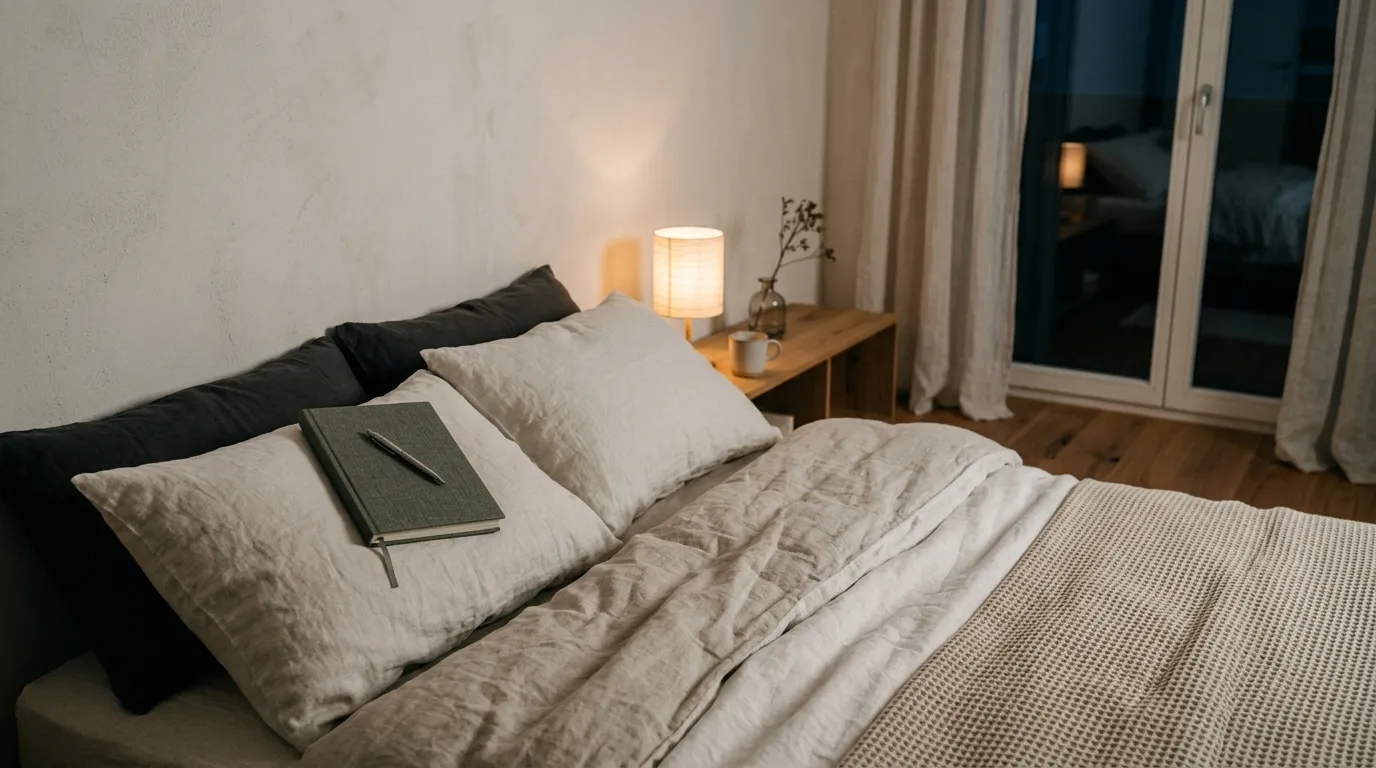
A well-crafted evening routine will fail if the room you step into undermines your biological requirements. Your bedroom should serve as an environmental cue that demands zero vigilance from your nervous system.
Temperature and Air Quality
The human body needs to drop its core temperature by approximately 2°F (1°C) to enter stage-three deep sleep. Keep your bedroom ambient temperature between 65°F and 68°F (18°C to 20°C). If your room lacks central climate regulation, use breathable natural fibers like linen or percale cotton, and crack an interior door or window to prevent carbon dioxide buildup, which is a common cause of middle-of-the-night micro-arousals.
Darkness and Lux Control
Ambient streetlight leakage impairs restorative sleep architecture even if your eyelids remain closed. Install blackout shades or invest in a contoured, low-pressure eye mask. If you need navigation light for nighttime bathroom visits, install motion-activated floor-level amber LED nightlights rather than clicking on standard bathroom overheads.
Sound Attenuation
Sudden shifts in ambient decibel levels wake the brain, even if you do not remember waking. If you live in an urban environment with traffic or neighbor noise, smooth out auditory spikes by using a dedicated white or pink noise machine placed between your bed and the noise source.
Common Evening Mistakes and Quick Corrections
- The “Revenge Bedtime Procrastination” Trap: When your day feels stripped of personal control, staying up scrolling feels like taking back your time. Replace screen indulgence with an enjoyable, non-digital leisure habit like a gripping physical fiction book or a dedicated audio program.
- Eating Too Close to Bed: Digesting heavy, high-fat, or high-sugar meals within three hours of bedtime increases resting heart rate and body temperature, disrupting deep delta-wave sleep. If hunger strikes late, stick to a light serving of complex carbs or a handful of raw nuts.
- Chasing Perfection Over Consistency: Missing a single step in a rigid 10-step routine often causes performance anxiety. Focus strictly on consistency of sleep timing and darkness rather than ticking off every ideal habit every night.
Frequently Asked Questions
How long does it take for a new evening routine to improve sleep quality?
Most people notice measurable reductions in sleep onset latency (how long it takes to fall asleep) within seven to ten consecutive days of maintaining consistent wind-down times and light levels. Subjective daytime energy and deep-sleep quality usually improve within two to three weeks as circadian rhythms stabilize.
What should I do if I lie in bed for 20 minutes without falling asleep?
Get out of bed. Remaining in bed while frustrated trains your brain to associate the mattress with wakefulness and anxiety. Move to a dimly lit armchair or couch, engage in a low-stimulation activity like reading under warm light, and return to bed only when your eyes feel heavy again.
Is reading on an e-reader acceptable during an evening routine?
E-readers that use front-lit e-ink displays with adjustable warm amber settings are acceptable alternatives to physical books, as they do not fire blue-spectrum light directly into your retinas. However, standard backlit tablets, smartphones, and computers emit concentrated short-wavelength light that suppresses melatonin and should remain turned off during the final 45 minutes of your night.