Disclosure: ClearPick Digest is supported by its readers. If you buy through links on this page, we may earn a commission at no extra cost to you. Read our affiliate disclosure.
Executive Summary
- Saves Time and Energy: Making a baked potato in an air fryer reduces cooking time by roughly 25–30% compared to a conventional oven, pulling far fewer kilowatts in the process.
- Superior Texture Contrast: Rapid convection airflow dehydrates surface moisture instantly, yielding blistered, salted skin while preserving a pillowy, fully gelatinized starch interior.
- Precise Target Metrics: The sweet spot for medium-to-large Russets is 400°F (200°C) for 40 to 45 minutes, aiming for an internal core temperature between 205°F and 210°F (96°C to 99°C).
The Physics of Air-Frying Potatoes vs. Conventional Baking
Standard wall ovens rely largely on radiant heat and natural convection, which disperses energy across a large cavity. This sluggish thermal transfer means a whole russet potato takes up to an hour and fifteen minutes to bake through, often trapping surface humidity that softens the outer peel.
An air fryer operates as a high-velocity convection micro-chamber. The heating coil sits directly adjacent to a high-RPM fan, driving superheated air over the surface of the potato continuously. This aerodynamic heat transfer triggers three distinct reactions:
- Rapid Surface Dehydration: High air speed wicks ambient moisture away from the skin immediately, paving the way for the Maillard reaction without boiling the exterior tissue.
- Even Heat Diffusion: Thermal energy penetrates toward the dense core without developing the burnt hot spots typical of static baking sheets.
- Internal Steam Pressure: Water inside the potato vaporizes, forcing starch granules to swell and gelatinize. Because the skin remains firm, this steam stays momentarily trapped, ensuring a light, cloud-like crumb rather than a dense, gummy paste.
For compact apartments or eco-conscious kitchens, running a compact 1,500-watt appliance for 40 minutes consumes substantially less baseline power than heating a 3,000-watt conventional range, keeping ambient kitchen heat negligible during warmer months.
Step-by-Step Prep and Air Frying Technique
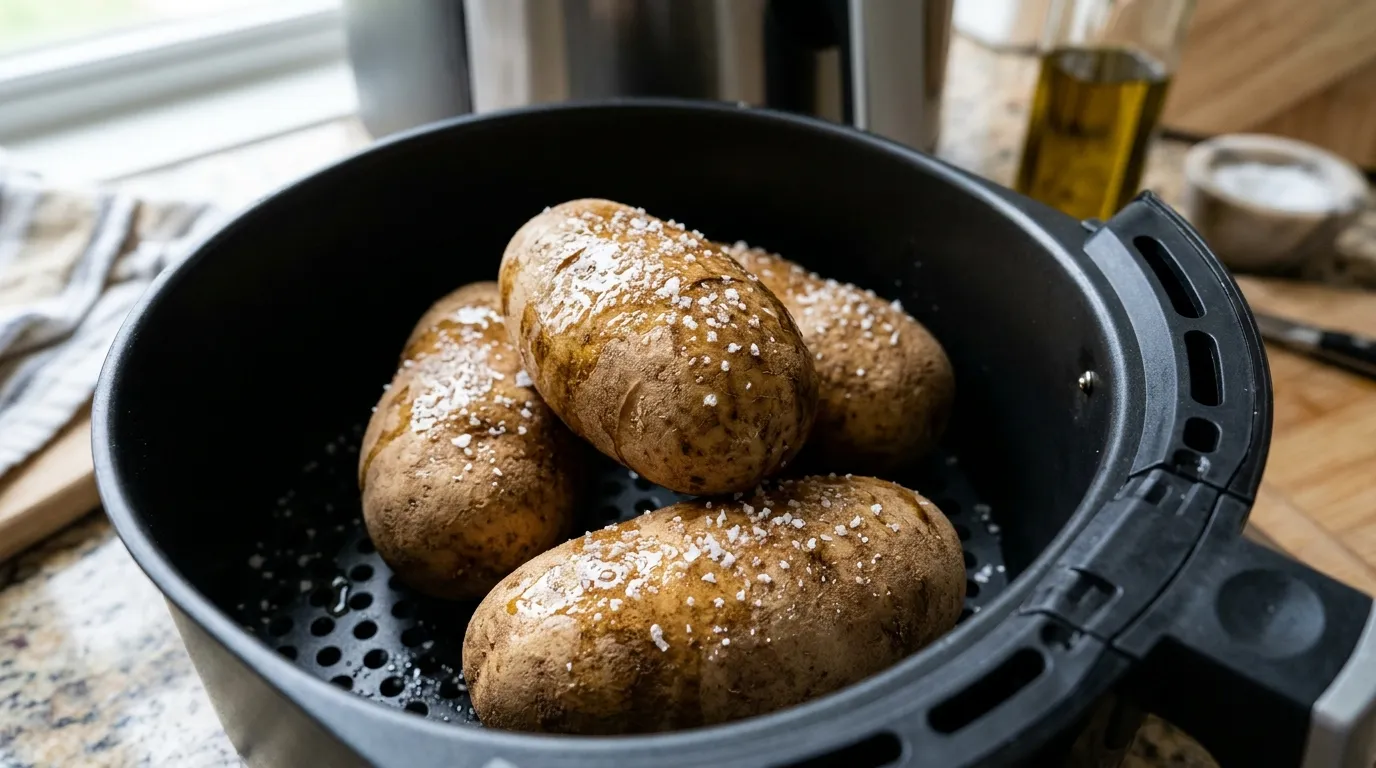
Getting restaurant-quality results requires careful moisture control before the potato ever hits the basket.
1. Potato Selection and Scrubbing
Select standard Russet (Idaho) potatoes weighing between 7 and 9 ounces each. Russets possess high starch and low moisture levels, making them ideal for high-heat roasting. Scrub the skin with a firm bristle brush under cold water to remove residual field grit.
2. The Dehydration Phase
Pat the potatoes dry using a lint-free kitchen towel. Let them air-dry on a counter rack for 10 minutes. Any lingering film of water will flash into surface steam in the air fryer, delaying skin crisping.
3. Puncturing and Seasoning
Using the tines of a dinner fork, pierce each potato 6 to 8 times across the circumference, pressing roughly 1/2-inch deep. These relief vents allow excess internal pressure to escape, preventing catastrophic skin blowouts.
Rub each potato with 1/2 teaspoon of high-smoke-point cooking fat (such as avocado oil, refined olive oil, or beef tallow). Immediately roll the potato in coarse sea salt or kosher salt. The coarse crystals adhere to the oil and form a savory crust.
4. The Cook Cycle
- Preheat: Run the air fryer at 400°F (200°C) for 3 minutes.
- Arrangement: Place potatoes into the basket with at least 1 inch of clearance around every side. Airflow must remain unobstructed.
- Cook: Set the timer for 40 minutes.
- The Turn: At the 20-minute mark, use silicone tongs to rotate each potato 180 degrees. This offsets vertical heating gradients and guarantees an even crunch.
Common Mistakes That Lead to Soggy Skins or Dense Centers
While the process is straightforward, skipping basic thermodynamic rules results in subpar textures.
Using Aluminum Foil
Never wrap potatoes in foil when using an air fryer. Foil blocks convective airflow completely, effectively steaming the spud in its own moisture. This yields wet, papery skins and a gummy interior. Cook the potato completely naked on the crisper plate.
Overcrowding the Chamber
Stacking potatoes or packing them tightly against the basket walls creates dead air zones. Without direct high-speed airflow, skin crisping halts, and cook times extend significantly. If preparing dinner for a family of four, ensure your air fryer basket offers sufficient square footage, or cook in batches and warm them through briefly before serving.
Guessing Internal Doneness by Touch
Squeezing the potato with tongs gives an imprecise estimate of internal texture. A potato can feel soft on the exterior while remaining chalky and under-gelatinized near the core. Use an instant-read digital probe thermometer inserted into the thickest center point.
- Under 200°F (93°C): The starch structure remains rigid and dense.
- 205°F to 210°F (96°C to 99°C): Peak doneness. Pectin breaks down, leaving the interior light and dry.
- Above 212°F (100°C): Starch dries out excessively, yielding a mealy, desiccated texture.
Letting Steam Settle Post-Cook
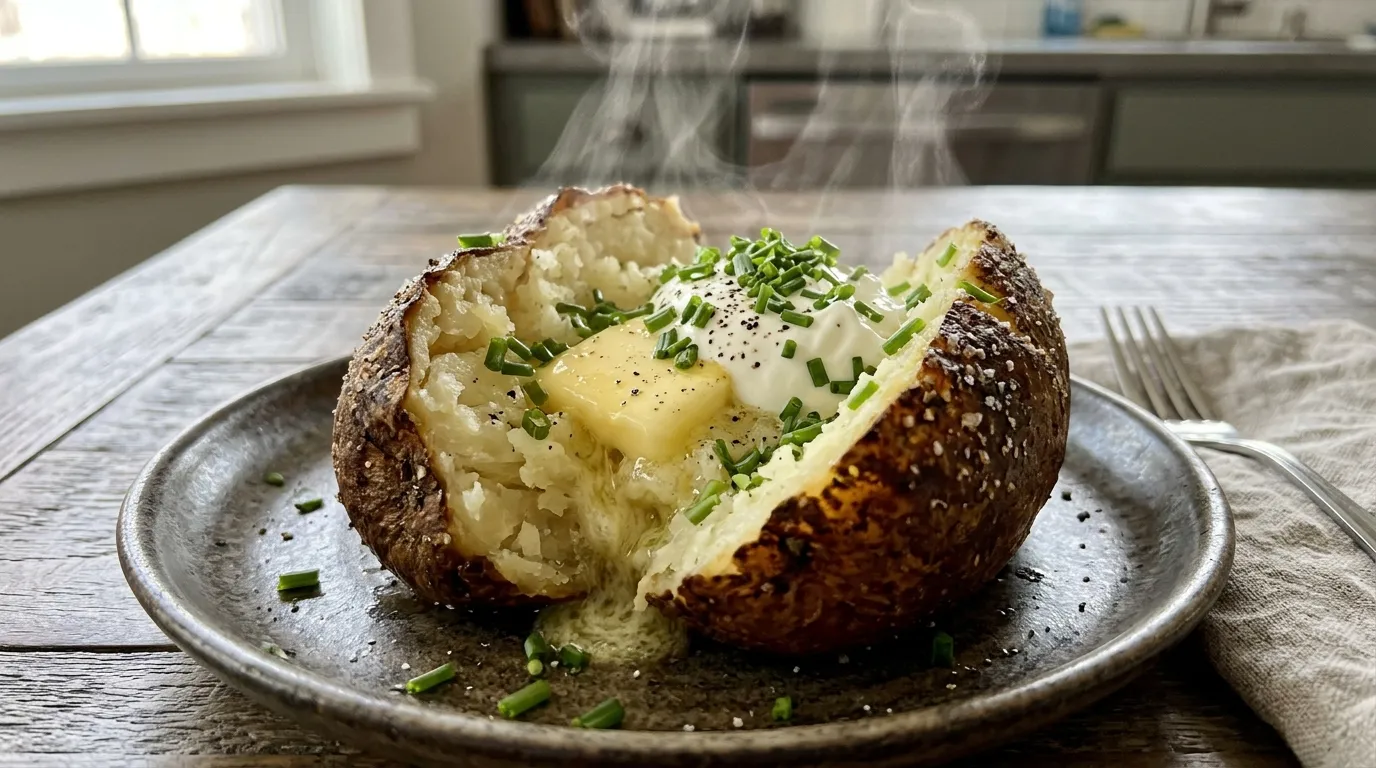
When you pull the potato from the air fryer, do not leave it intact on a plate. The residual internal steam will condense back into the potato flesh within minutes, making it heavy. Immediately slice an “X” into the top, press inward from the sides with a clean towel to expose the interior, and let the initial burst of steam billow out. Fluff the flesh with a fork before adding cold butter or toppings.
Selecting the Right Spud for Energy-Efficient Roasting
While Russets are the gold standard for classic baked potatoes, waxy and intermediate varieties perform differently in a convection environment:
| Potato Variety | Starch Level | Moisture Level | Air Fryer Skin Quality | Recommended Cook Time (400°F) |
|---|---|---|---|---|
| Russet | High | Low | Exceptionally crisp, blistered | 40–45 minutes |
| Yukon Gold | Medium | Medium | Thin, snappy, delicate | 35–40 minutes |
| Red Bliss | Low | High | Leathery, tends to wrinkle | Not recommended for whole baking |
| Sweet Potato (Jewel) | Medium-High | High | Caramelized, tender (not crisp) | 35–45 minutes |
Yukon Golds make an excellent alternative if you prefer a naturally buttery flavor and denser, velvety interior, though their skins will not achieve the dry, cracker-like crunch of a salted Russet.
Frequently Asked Questions
Can you cook baked potatoes in an air fryer without oil?
Yes. Cooking potatoes without oil produces an edible, blistered skin, but the surface will appear dull and chalky. Oil acts as a thermal conductor that evenly toasts the skin and binds the salt crystals. If you are minimizing added fats, a light mist from an oil pump sprayer is sufficient to boost crispness without adding excess calories.
Why is my air fryer baked potato hard in the middle?
An undercooked center indicates either insufficient cook time or an uncalibrated appliance temperature. Dense Russet tubers require extended thermal soak to break down inner starch chains. If your potato reads below 205°F (96°C) at the center, return it to the basket at 400°F (200°C) for an additional 5 to 8 minutes.
How do I reheat a leftover baked potato in the air fryer?
Reheating whole cooked potatoes in the microwave ruins their exterior texture. Instead, place the cold potato in an air fryer preheated to 350°F (175°C) for 8 to 10 minutes. The convection air will recrisp the skin while gently warming the butter and starch at the center without drying it out.