Disclosure: ClearPick Digest is supported by its readers. If you buy through links on this page, we may earn a commission at no extra cost to you. Read our affiliate disclosure.
Executive Summary
- Airflow Drives Crispness: Air fryers rely on concentrated convection heat and high-velocity circulation, reducing cooking times by up to 30% compared to conventional ovens.
- Surface Area Dictates Texture: Overcrowding traps evaporating steam; cooking in spaced batches produces significantly crispier results than filling the basket to capacity.
- Coating Care Extends Life: Avoiding propellant-based cooking sprays and hand-washing nonstick baskets preserves appliance longevity and prevents peeling.
How Air Fryers Work: Convection Physics on Countertops
An air fryer functions as an ultra-compact convection chamber. A concentrated heating coil suspended directly above a perforated basket pairs with a high-speed top-mounted fan. When active, this fan drives superheated air downward, around, and under the food before cycling it back up.
Because the interior cavity is significantly smaller than a standard range oven—typically between 3 to 10 quarts—the radiant heat density is exponentially higher. This rapid thermal transfer evaporates surface moisture instantly, initiating the Maillard reaction with a fraction of the oil needed for traditional pan-frying or deep-frying.
For compact living and apartment kitchens, this thermal efficiency provides a dual benefit: minimal ambient heat buildup in small spaces and significantly lower electrical draw compared to preheating a 3,000-watt full-sized oven.
The Most Common Air Frying Mistakes That Ruin Texture
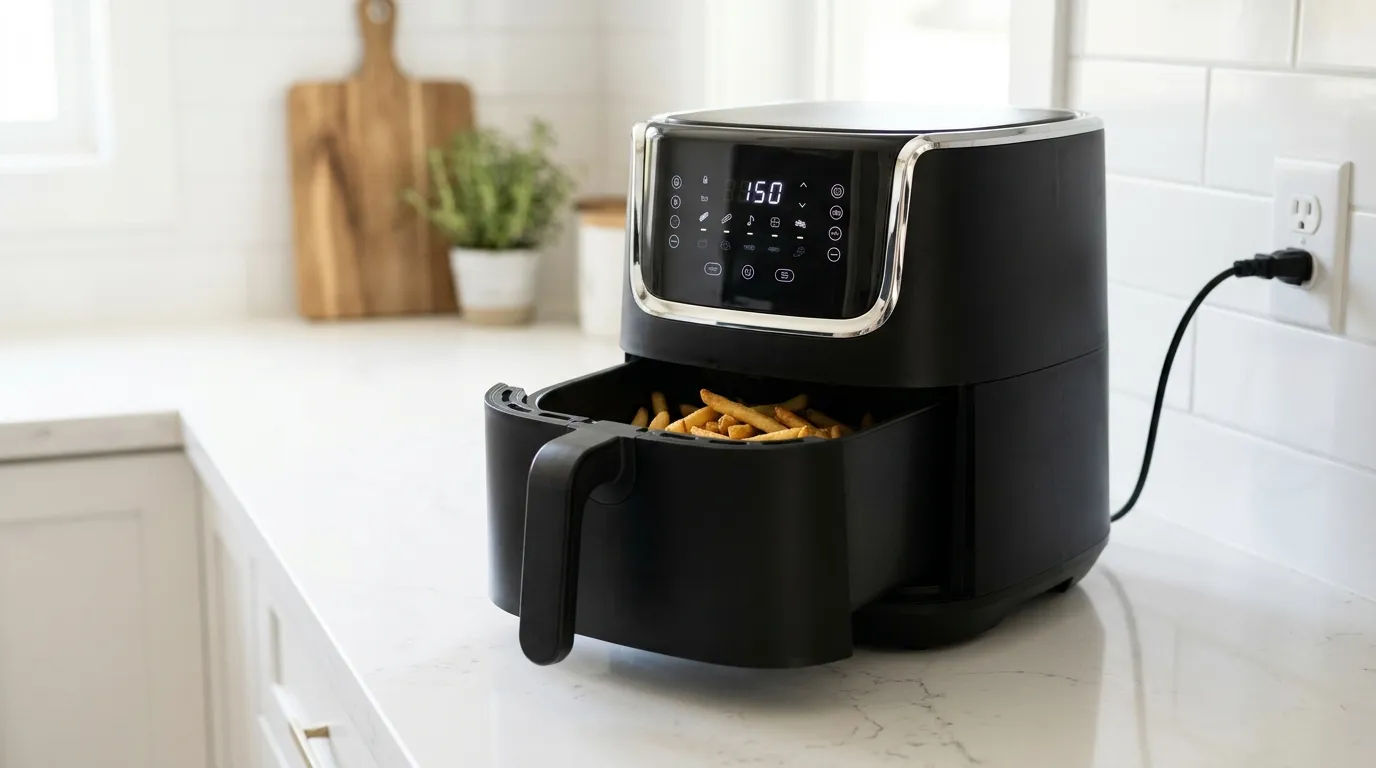
Achieving restaurant-level crunch requires understanding moisture dynamics. Small operational missteps frequently turn crisping cycles into unintentional steaming sessions.
1. Overfilling the Basket
When protein or vegetables overlap tightly, thermal air cannot circulate beneath each piece. The trapped moisture converts directly into steam, resulting in a soft, soggy exterior. For optimal results, arrange items in a single layer with at least a quarter-inch clearance between pieces.
2. Using Propellant-Loaded Aerosol Sprays
Standard commercial aerosol cooking sprays contain emulsifiers such as lecithin and chemical propellants. Over time, these agents degrade and polymerize onto nonstick coatings, creating an irreversible, gummy film that ruins the nonstick surface. Instead, apply a thin coat of high-smoke-point oil (such as avocado or refined olive oil) using a refillable pump mister or a silicone brush.
3. Skipping the Shake or Mid-Cycle Flip
Even with high airflow, the top surface facing the direct heating coil receives far more radiant heat than the underside resting on the crisper plate. Setting a midway timer to vigorously shake the basket or rotate larger cuts of protein ensures balanced crisping across all sides.
Basket-Style vs. Oven-Style: Selecting for Small Spaces
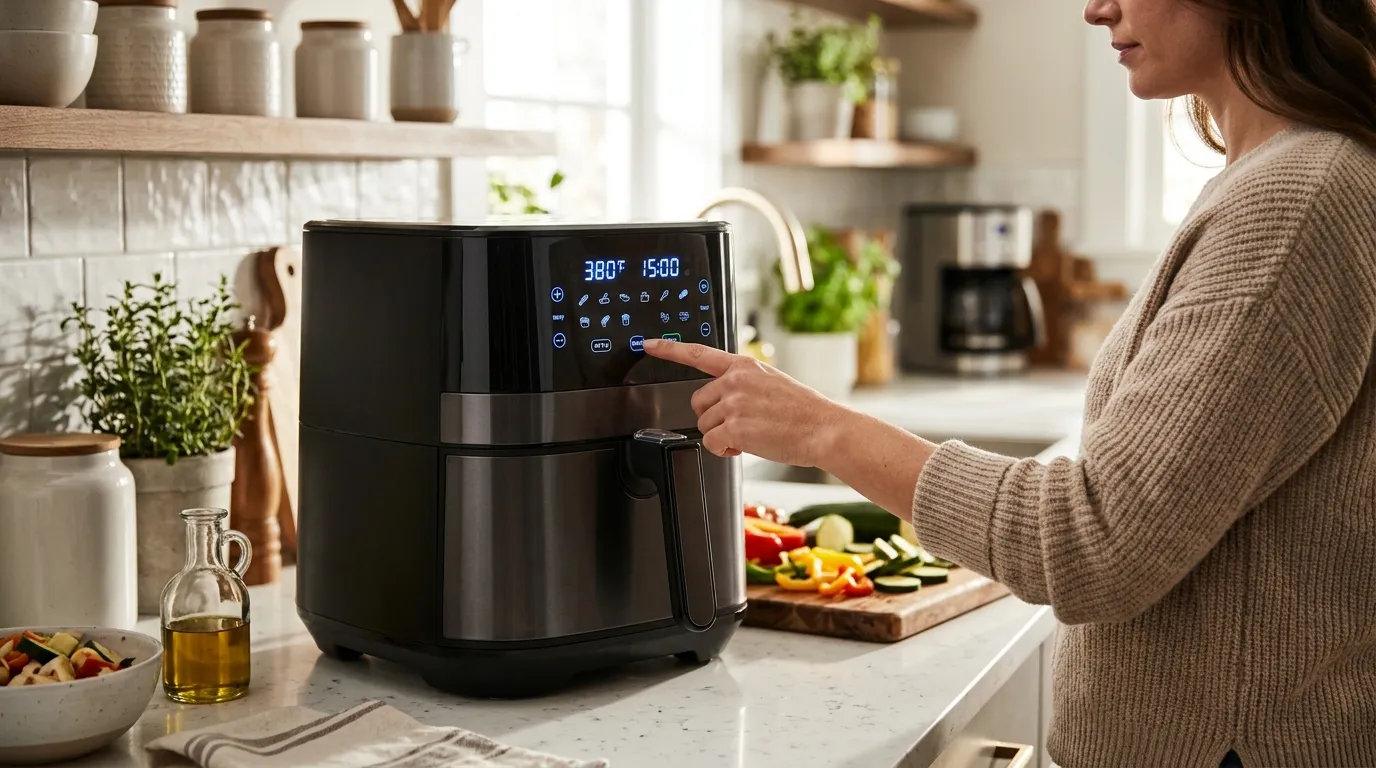
Choosing the correct form factor depends entirely on your cooking habits, counter dimensions, and vertical cabinet clearance.
| Feature | Basket-Style Air Fryer | Oven-Style (Toaster/Air Fryer Combo) |
|---|---|---|
| Footprint | Compact, narrow, taller profile | Wider, deeper, demands more horizontal space |
| Airflow Speed | Very high (optimal for rapid crisping) | Moderate (larger chamber diffuses air speed) |
| Batch Capacity | Best for 1–3 servings per basket | Accommodates sheet pans, whole chickens, multiple racks |
| Cleaning Effort | Easy; pull-out basket washes in minutes | More complex; requires wiping walls, doors, and crumb trays |
| Versatility | Focused on crisping, reheating, roasting | Can replace a toaster, broiler, and dehydrator |
For studio apartments and small kitchens where counter space is at a premium, cylindrical or rectangular basket models remain the most practical choice. They can be stowed inside deep lower cabinets when not in use. Oven-style units suit larger households willing to dedicate permanent counter space to a multi-use appliance.
Maintenance and Longevity: Protecting Nonstick Coatings
The primary point of failure for air fryers is not the heating element or motor, but the degradation of the nonstick crisper tray and basket. To maintain clean performance and food safety over years of use:
- Avoid Thermal Shock: Never submerge a hot air fryer basket directly into cold sink water. Drastic temperature drops warp the metal base and cause the ceramic or PTFE coating to micro-crack and flake.
- Soak with Mild Detergents: Allow the basket to cool down to room temperature, then fill it with warm water and liquid dish soap for ten minutes. Use a non-abrasive microfiber cloth or soft sponge—never scouring pads or steel wool.
- Deodorize the Heating Element: Grease residue can vaporize and settle around the upper heating element, causing odors during subsequent uses. Once the appliance is completely unplugged and cold, invert the unit and gently wipe down the upper coil with a damp cloth to remove oil splatters.
Frequently Asked Questions
Can you put parchment paper or aluminum foil in an air fryer?
Yes, but with strict safety precautions. Never preheat the air fryer with loose parchment paper or foil alone inside; the high-velocity fan will pull the lightweight paper into the exposed heating element, creating a fire hazard. Always ensure food weighs down the liner completely, and opt for perforated parchment rounds designed specifically to allow convective airflow.
Does an air fryer use less electricity than a conventional oven?
Yes. A typical air fryer consumes between 1,400 and 1,800 watts and cooks food in roughly half the total time (including preheat duration) of a standard electric oven, which draws 2,500 to 5,000 watts. This makes the air fryer far more energy-efficient for everyday portions.
Do you need to preheat an air fryer before cooking?
While many manufacturers state preheating is optional, giving the basket two to three minutes to reach target temperature ensures immediate searing. Starting cold often leads to slight oil absorption before surface crisping begins, especially with battered or delicate ingredients. Check your specific model’s manual for recommended preheating sequences.