Disclosure: ClearPick Digest is supported by its readers. If you buy through links on this page, we may earn a commission at no extra cost to you. Read our affiliate disclosure.
Executive Summary
- Cook Time & Temp: A standard 6-ounce salmon filet cooks to tender perfection at 400°F (204°C) in just 7 to 9 minutes, eliminating the long preheat cycles of traditional ovens.
- Moisture Control: Thoroughly drying the filet surface before lightly brushing with high-smoke-point oil ensures a crisp exterior while preventing protein breakdown.
- Thermal Doneness: Pull the fish when the thickest section registers between 125°F and 130°F for medium doneness; residual carryover heat will finish the cooking without pushing out dry white albumin.
Why Convection Heating Delivers Superior Salmon
Cooking delicate seafood in a standard conventional oven often leads to a frustrating trade-off: either the exterior lacks color, or the interior dries out during the prolonged bake time. An air fryer solves this through intense, concentrated convection circulation. The high-velocity heating element rapidly evaporates surface moisture while rendering the subcutaneous fat layer, creating a crisp, caramelized exterior within minutes.
Because the chamber is compact, thermal transfer happens almost instantaneously. This high heat-to-surface ratio prevents the internal muscle fibers of the salmon from contracting too aggressively, which preserves natural oils and omega-3 fatty acids. The result is a steakhouse-quality sear paired with a flaky, tender interior that traditional baking simply cannot replicate on a weeknight timeline.
Step-by-Step Cooking Technique and Temperature Calibration
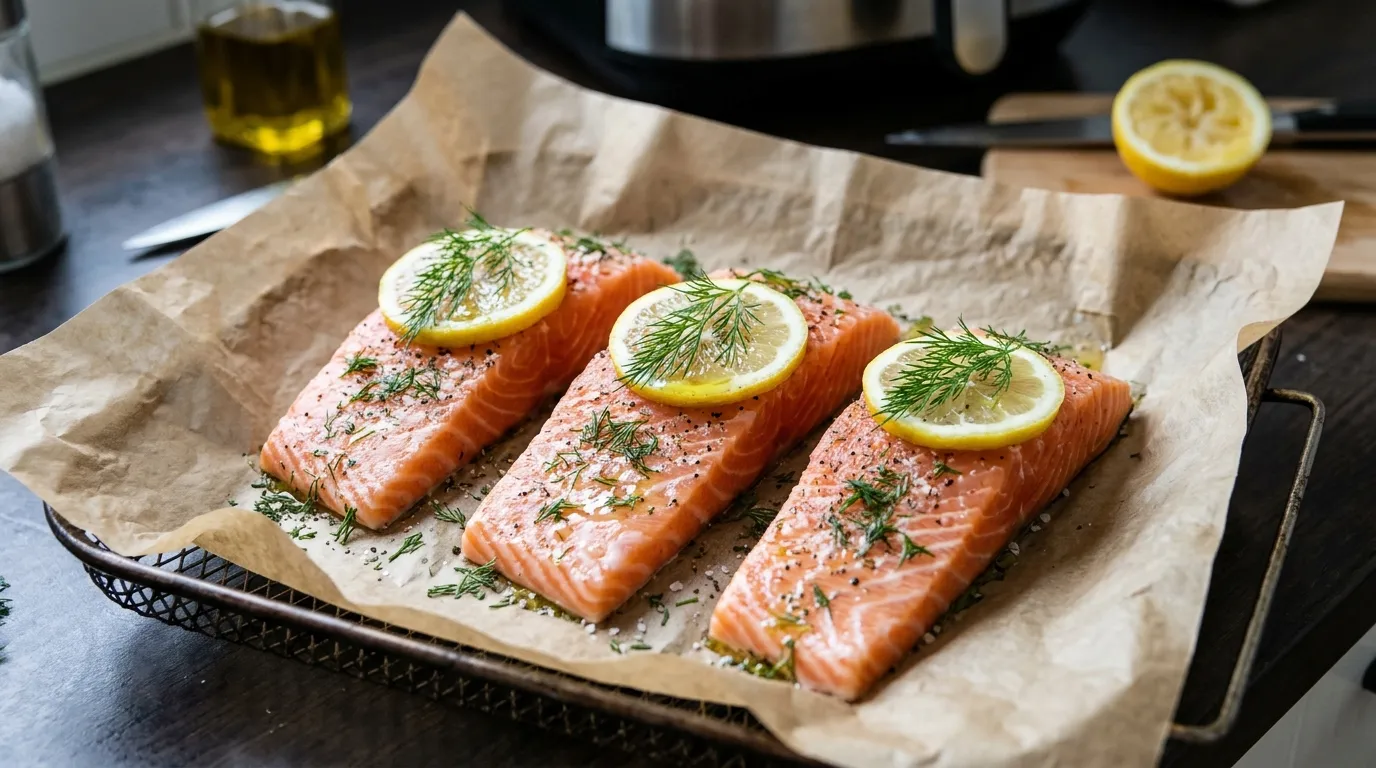
Getting reproducible, restaurant-grade results comes down to mechanical consistency rather than complex culinary skills. Follow this precise workflow:
- Surface Preparation: Remove filets from refrigeration 10 minutes before cooking. Use paper towels to blot away all surface moisture on both the flesh and skin sides. Moisture is the enemy of browning; excess surface water steams the fish instead of searing it.
- Light Oil Application: Brush the flesh with an oil that features a high smoke point, such as avocado oil or refined olive oil. Avoid unrefined extra virgin olive oil, which can scorch and taste bitter under intense convection heat.
- Seasoning Strategy: Apply coarse kosher salt, freshly cracked black pepper, and dry spices like garlic powder, smoked paprika, or dried dill. Avoid wet marinades with high sugar content at this stage, as they will burn before the fish reaches target temperature.
- Basket Placement: Lay the filets skin-side down in a single layer with at least one inch of clearance between pieces. Never overlap filets, as blocked airflow leads to uneven cooking.
- Cook Settings: Set the appliance to 400°F (204°C). Cook 1-inch thick center-cut filets for 7 to 8 minutes. For thicker cuts (1.5 inches or more), adjust the time to 9 to 11 minutes.
Preventing Albumin Buildup and Overcooking
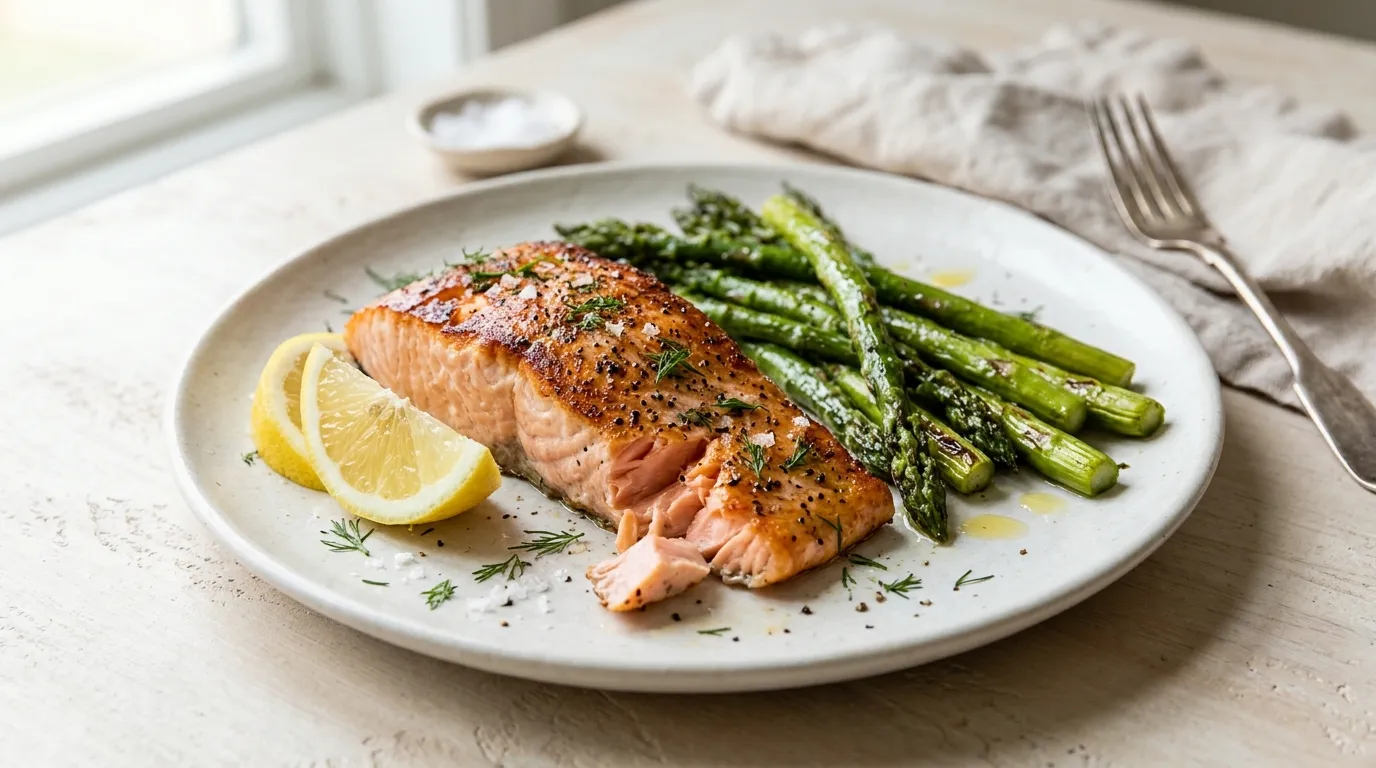
One of the most common issues when preparing air fryer salmon is the emergence of white, curd-like droplets across the surface. This substance is albumin—a harmless protein that coagulates when muscle fibers contract too rapidly and squeeze out moisture.
While albumin is safe to eat, its presence signals that the fish has experienced thermal shock or is entering the overcooked zone. To eliminate albumin buildup:
- Check Internal Temperatures Early: Rely on an instant-read digital thermometer rather than strict timer reliance. Insert the probe horizontally into the thickest center part of the filet. Pull wild salmon (such as Sockeye or Coho) at 120°F to 125°F, as its lower fat content dries out quickly. Pull richer farmed Atlantic salmon at 130°F.
- Account for Carryover Cooking: Once transferred to a warm serving plate, salmon continues cooking for 2 to 3 minutes via residual heat, rising an additional 5°F.
- Brine for Problem Filets: If you frequently struggle with albumin, soak your raw filets in a basic 5% saline solution (1 tablespoon of fine salt dissolved in 1 cup of cold water) for 10 minutes prior to drying and seasoning. The salt subtly denatures the exterior proteins, locking the albumin inside during high-heat cooking.
Glazes, Liners, and Clean Airflow Management
While dry seasonings can go into the basket from minute zero, sugar-heavy sauces (such as teriyaki, honey mustard, or maple soy) require a staggered approach. High-velocity air circulating at 400°F will char honey and refined sugars in under 4 minutes. Brush glazes onto the salmon during the final 2 minutes of cooking. This allows the sugars to bubble and caramelize into a glossy coating without turning bitter or black.
For cleanup, many home cooks reach for parchment paper liners. While perforated parchment designed for air fryers helps prevent sticking, improper use can obstruct bottom airflow and create a fire hazard if not weighted down by the food.
If your air fryer features a high-grade ceramic or nonstick basket, skip the liner entirely for salmon. Placing skin-on salmon directly onto a lightly oiled basket wire creates the crispiest skin and allows rendered fats to drain cleanly into the lower pan, leaving zero greasy residue on the plate.
Frequently Asked Questions
Do you need to flip salmon in an air fryer?
No. Because air fryers circulate hot air beneath the perforated cooking grate, flipping is unnecessary and risks breaking delicate, flaky filets. Leaving the fish skin-side down the entire time protects the tender flesh while crisping the skin.
Can you cook salmon from frozen in an air fryer?
Yes, though texture is best when thawed. To cook frozen filets, run the air fryer at 360°F (182°C) for 7 minutes to gently thaw and render surface moisture. Then, brush with oil, apply seasonings, and raise the temperature to 400°F (204°C) for an additional 6 to 8 minutes until the internal temperature reaches safe doneness.
Why is the skin on my air fryer salmon rubbery instead of crisp?
Rubbery skin occurs when excess moisture remains trapped underneath the filet, or when the air fryer basket is overcrowded. Ensure the skin is completely dry before oiling, cook at no lower than 400°F, and avoid using solid, unperforated baking liners that trap steam under the base of the fish.