Disclosure: ClearPick Digest is supported by its readers. If you buy through links on this page, we may earn a commission at no extra cost to you. Read our affiliate disclosure.
Executive Summary
- Surface dryness is paramount: Removing all exterior moisture and adding a trace amount of baking powder accelerates dehydration for crackling, shatter-crisp skin.
- Two-phase cooking works best: Rendering the subcutaneous fat at a moderate temperature before blasting high heat yields juicy meat without greasy pooling.
- Saucing belongs at the finish line: Glazing wings after cooking prevents sugars from burning under intense convection circulation and preserves crunch.
The Physics of Crispiness: Why Air Fryers Outperform Ovens
Achieving crispy skin on chicken wings requires rendering collagen and subcutaneous fat while simultaneously driving off surface moisture. In traditional deep frying, bubbling oil rapidly vaporizes water. However, deep frying generates persistent odors, consumes high volumes of oil, and requires messy disposal.
A convection countertop air fryer bridges the gap between deep frying and standard baking through concentrated thermodynamic efficiency:
- High-Velocity Air Circulation: A top-mounted heating element paired with an aggressive fan creates a localized vortex. This rapid airflow strips away the boundary layer of humid air hovering around raw poultry.
- Compact Cavity Dynamics: Because the air fryer basket occupies a fraction of a standard oven’s cubic volume, heat transfers into the food rapidly, encouraging efficient Maillard browning.
- Continuous Fat Drainage: Perforated baskets allow liquefied chicken fat to drip cleanly into the base pan. Rather than poaching in rendered grease, the wings remain suspended in dry, circulating heat.
Prep Protocol: Surface Moisture and the Baking Powder Method
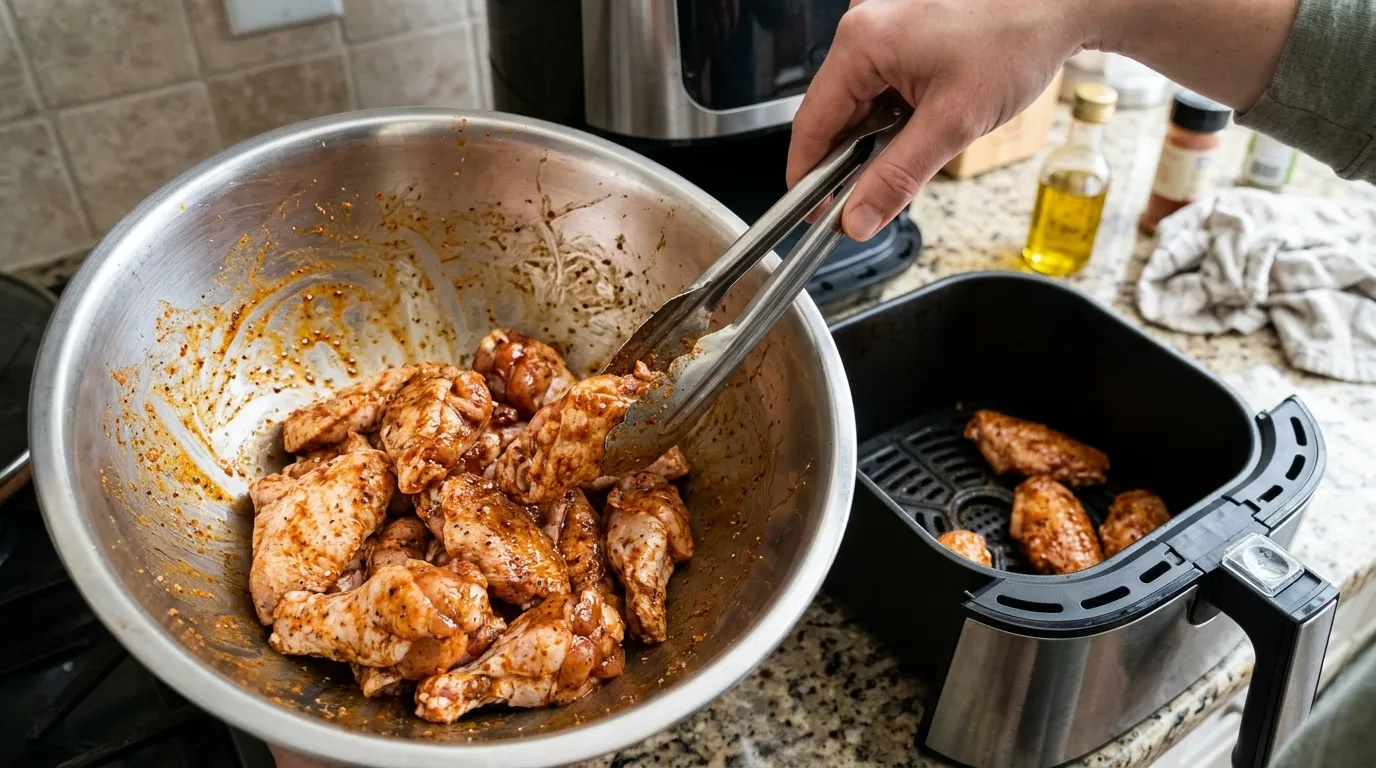
Restaurant-style crispiness begins well before setting the timer. Water is the direct enemy of the Maillard reaction; any residual surface moisture turns into steam, which softens the skin.
1. Thorough Dehydration
Remove the wings from their packaging and pat them aggressively dry with paper towels. For optimal results, arrange them uncovered on a wire rack in the refrigerator for two to four hours. The ambient circulation inside the fridge acts as a preliminary dry-brine phase, pulling moisture out of the outer epidermis.
2. The Alkaline Boost (Aluminum-Free Baking Powder)
Tossing the dried wings with a half-teaspoon of aluminum-free baking powder per pound of meat changes the game. The alkaline pH of the baking powder breaks down protein bonds in the skin, which forms micro-blisters during cooking. These tiny bubbles expand into an airy, crackling crust. Note: Never substitute baking soda for baking powder, as baking soda leaves a harsh, metallic aftertaste.
3. Light Oil Coating
While chicken skin already contains significant fat, a very light mist of neutral, high-smoke-point oil (such as avocado or refined olive oil) ensures uniform thermal conduction across dry seasoning patches.
Temperature Staging: The Two-Phase Heat Strategy
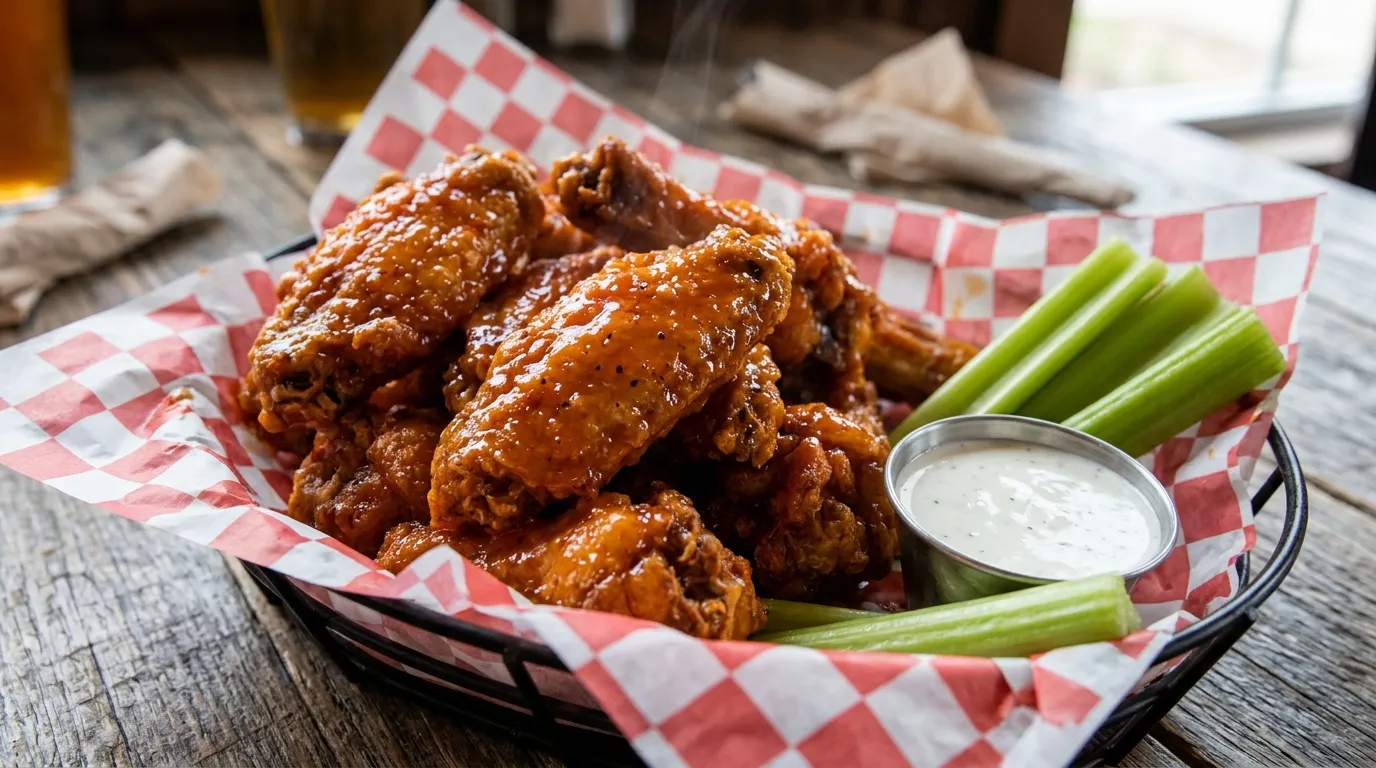
Cooking wings at a single static temperature often results in a compromise: either the exterior burns before the inner connective tissue softens, or the meat cooks through while the skin remains rubbery. A two-stage heat profile resolves this issue cleanly.
| Phase | Target Air Fryer Temp | Duration | Primary Objective |
|---|---|---|---|
| Phase 1: Render & Tenderize | 360°F (182°C) | 16–18 minutes | Liquefies subcutaneous fat and breaks down tough collagen into gelatin. |
| Phase 2: Crisp & Brown | 400°F (204°C) | 5–7 minutes | Blisters the dehydrated surface, triggers Maillard browning, and builds texture. |
Execution Steps:
- Preheat your unit: Allow the air fryer to run empty for 3 to 5 minutes at 360°F to ensure immediate, even radiant transfer.
- Arrange in a single layer: Position drumettes and flats with at least a quarter-inch of space between pieces. Overcrowding blocks airflow and creates pockets of trap steam.
- Execute the flip: Halfway through Phase 1 (around the 8-minute mark), use silicone-tipped tongs to turn each wing over.
- The final blast: Increase the temperature dial to 400°F for the final 5 to 7 minutes. Keep an eye on the basket during the final two minutes to pull them at your preferred level of char.
Common Pitfalls That Lead to Soggy or Uneven Wings
Even seasoned home cooks encounter common snags when dialing in air fryer poultry. Avoiding these technical errors guarantees consistent results:
- Saucing Before Cooking: Honey, barbecue sauce, and sweet glazes contain high levels of fructose and sucrose. Under direct convection coils, these sugars char black within minutes. Cook the wings naked or with dry spices, warm your sauce separately, and toss the wings in a wide stainless steel bowl immediately after pulling them from the basket.
- Stacking Multiple Layers: If you are preparing a large batch for a crowd, cook in sequential rounds rather than mounding wings atop each other. Cooked batches can be held on a warm sheet pan and blasted together at 400°F for 90 seconds just before serving.
- Skipping Drip Pan Maintenance: If you are running multiple batches back-to-back, periodically wipe excess fat from the collection drawer below the basket. When rendered chicken fat accumulates in high heat, it can smoke and impart an acrid taste to subsequent rounds.
Frequently Asked Questions
Can you cook frozen chicken wings directly in an air fryer?
Yes, but expect a softer skin texture. To cook from frozen, run the air fryer at 380°F for 10 minutes to thaw and separate the wings. Drain the excess water and melted ice that pools in the bottom drawer, pat the wings dry, apply a light coat of oil and seasoning, and then proceed with the standard two-phase cooking schedule.
Do air fryer chicken wings require cornstarch?
Cornstarch is an effective crutch if you do not have aluminum-free baking powder, but it absorbs moisture rather than altering the skin’s pH. A very light dusting of cornstarch produces a crisp crust, though excessive amounts can leave a powdery or chalky mouthfeel. Baking powder generally provides an airier, blistered texture.
How do you reheat leftover wings to restore their original crunch?
Avoid the microwave, which turns chicken skin rubbery. Place chilled leftover wings back into a preheated air fryer at 375°F for 3 to 4 minutes. The dry convection air rapidly re-renders residual oils and restores crispness without overcooking the interior meat.