Disclosure: ClearPick Digest is supported by its readers. If you buy through links on this page, we may earn a commission at no extra cost to you. Read our affiliate disclosure.
Executive Summary
- Target 175°F to 185°F internally: While poultry is safe at 165°F, dark meat thighs yield the most tender texture when connective tissue fully melts at higher temperatures.
- Surface moisture determines crispness: Thoroughly drying the skin with a paper towel matters more than adding excessive cooking oil.
- Spacing preserves convection: Crowding the basket traps steam, preventing the circulating air from rendering the fat evenly.
Bone-In vs. Boneless: Timing and Heat Calibration
Cooking dark meat in a countertop convection basket offers speed and heat concentration that conventional ovens struggle to match. However, your approach must change depending on whether you cook bone-in, skin-on cuts or boneless, skinless cuts.
| Cut Type | Cooking Temp | Total Cook Time | Flip Point | Target Internal Temp |
|---|---|---|---|---|
| Bone-In, Skin-On | 380°F (193°C) | 22–25 minutes | At 12 minutes | 175°F–185°F (80°C–85°C) |
| Boneless, Skinless | 390°F (199°C) | 13–16 minutes | At 8 minutes | 170°F–175°F (77°C–80°C) |
Bone-in thighs take longer because the central bone insulates the surrounding meat from the direct convection stream. Start them skin-side down for the first half of the cook cycle. Flipping them skin-side up for the final stretch allows rendered fat to baste the surface while the top element delivers maximum crispness.
Boneless thighs cook quickly and risk drying out along their thinner tapered edges. Cooking them at a slightly higher temperature (390°F) for a shorter duration browns the exterior before the leaner interior loses moisture.
The Secret to Ultra-Crispy Skin Without Excess Oil
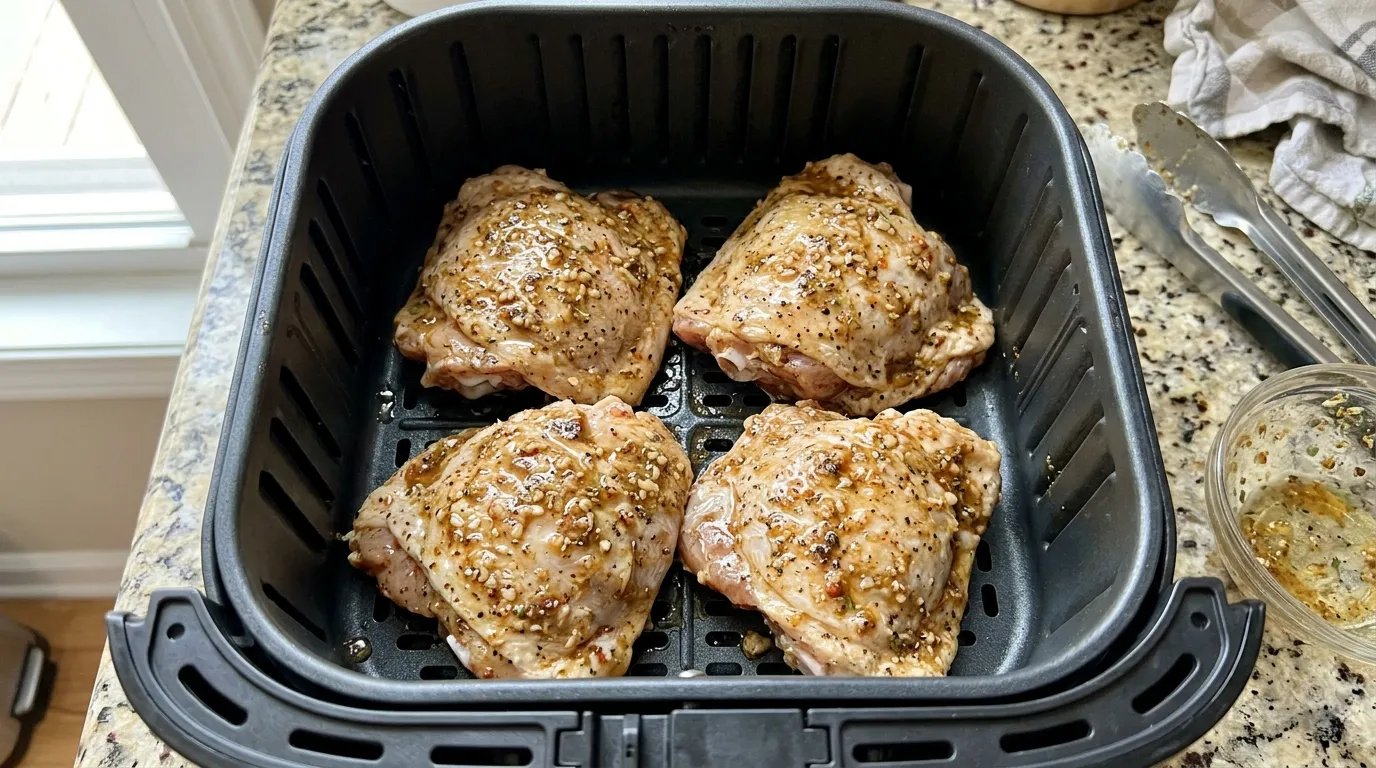
Air fryers circulate hot air to vaporize surface water and initiate the Maillard reaction. Excess surface moisture turns that airflow into steam, leaving the skin soft and chewy rather than crackling.
- Dry the surface thoroughly: Remove the thighs from their packaging and press them firmly between layers of paper towels. The drier the skin feels before seasoning, the crispier it becomes.
- Use minimal oil as a binder: You do not need deep pools of oil. A light brush or spritz of a high-smoke-point oil (such as avocado oil) gives spices something to adhere to without weighing down the skin.
- Add a pinch of baking powder: Tossing the dry rub with a quarter-teaspoon of aluminum-free baking powder per pound of meat alters the surface pH. This causes proteins to break down and form micro-blisters under high heat, mimicking deep-fried crunch.
- Finish with a high-heat blast: If your appliance allows quick temperature shifts, increase the heat to 400°F for the final 2 to 3 minutes of cooking. This flash-cooks the remaining rendered fat right before serving.
Common Air Frying Mistakes That Ruin Texture
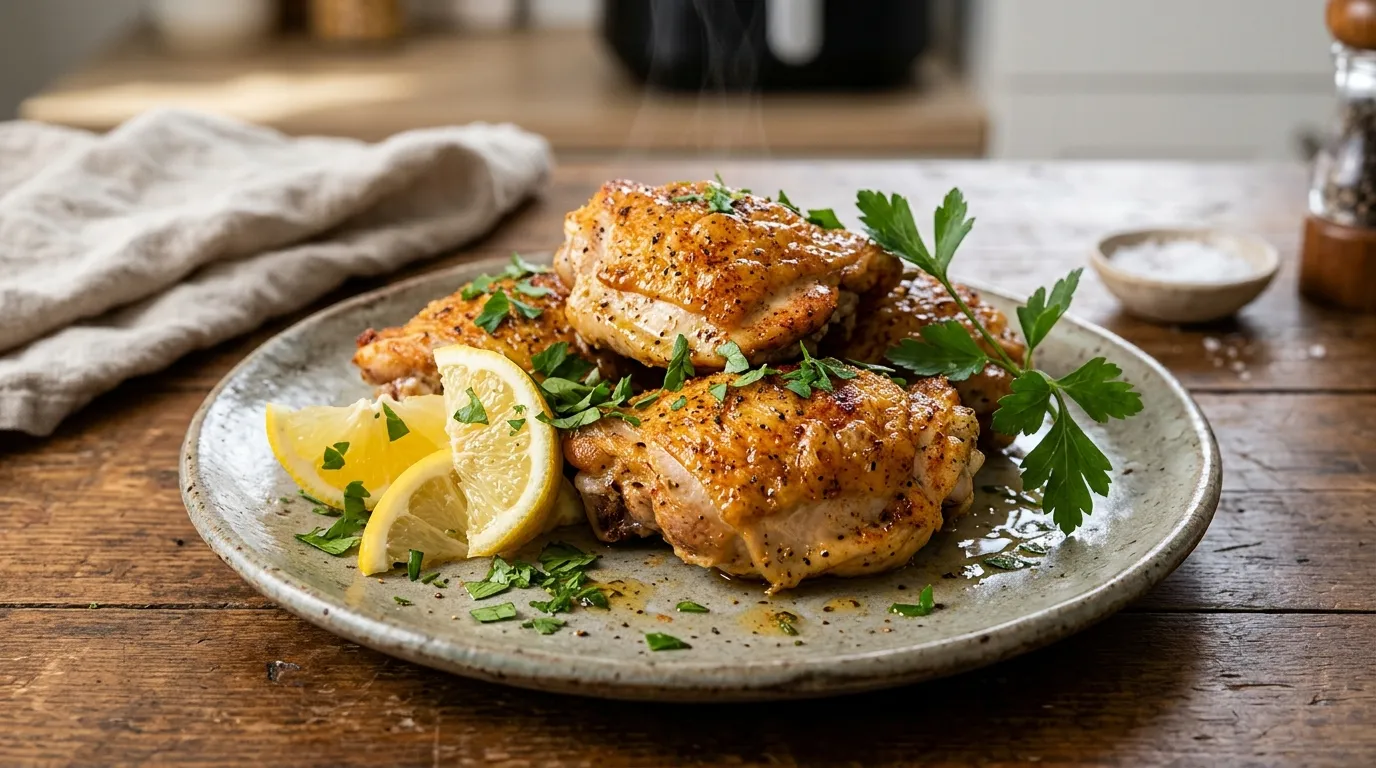
Small cooking chambers make air fryers efficient, but they also amplify standard kitchen errors.
Overcrowding the Basket
Arranging pieces so their sides touch stops horizontal air circulation. The trapped moisture steams the meat instead of roasting it. Leave at least a half-inch gap between each piece. If you are preparing dinner for a larger household, cook in two sequential batches rather than cramming everything into one basket.
Applying Sweet Sauces Too Early
Barbecue sauces, teriyaki glazes, and honey rubs burn rapidly under directed heating elements. Sugars begin scorching around 325°F. If you want a sauced finish, wait until the meat has reached its target internal temperature, brush the glaze on during the final 90 seconds, and let it tack up without charring.
Pulling the Meat at 165°F
White meat turns dry above 165°F, but dark meat behaves differently. Chicken thighs contain significant amounts of collagen and intramuscular fat. Letting them climb to 175°F–185°F gives that collagen enough time to break down into rich gelatin.
Fat Management and Smoke Prevention
Chicken thighs release significant amounts of rendered fat (schmaltz) into the lower drip tray during cooking. In compact kitchens or apartments with weak exhaust hoods, this fat can hit its smoke point if blown around by high-velocity fans.
- Add water or bread to the basin: Pouring two tablespoons of water or placing a slice of stale bread in the bottom collection drawer (beneath the perforated tray) captures dripping grease and keeps it from smoking against the bottom surface.
- Save the rendered fat: If you cook unbreaded, simply-seasoned thighs, the drippings in the lower tray can be strained through a fine-mesh sieve and chilled. This rendered chicken fat can replace butter or oil when roasting vegetables or pan-frying potatoes later in the week.
- Clean the element regularly: Unplug your cooled unit and wipe down the exposed heating coils overhead once a week. Stray grease splatters bake onto those elements and create persistent smoke during future sessions.
Frequently Asked Questions
Do you need to flip chicken thighs in the air fryer?
Yes. Although air fryers circulate heat beneath the basket, the primary heat source radiates from the top coil. Flipping midway through ensures both sides cook evenly, prevents bottom sogginess, and ensures the skin finishes crisp on top.
Can you cook frozen chicken thighs directly in an air fryer?
You can safely cook frozen boneless thighs by dropping the temperature to 360°F and extending the cook time by 8 to 12 minutes. However, seasoning does not stick well to frozen surfaces, and skin-on thighs rarely achieve an optimal crunch because the melting ice creates excess surface water. Thawing them completely produces noticeably better texture.
Why does my air fryer smoke when cooking chicken thighs?
The high fan speed inside the chamber can pull liquid fat splatters from the bottom drawer up into the heating element. To stop this, empty the drip tray between consecutive batches and place a small splash of water or a slice of bread in the base under the cooking rack.