Disclosure: ClearPick Digest is supported by its readers. If you buy through links on this page, we may earn a commission at no extra cost to you. Read our affiliate disclosure.
Executive Summary
- Target Internal Temperature: Always pull chicken breast at 160°F (71°C) and allow carryover cooking to reach the USDA-recommended 165°F (74°C) without drying out the muscle fibers.
- Thermal Uniformity: Pounding breasts to an even thickness (around 0.75 inches) prevents overcooked edges and undercooked centers.
- Airflow Optimization: Cook at 375°F to 380°F (190°C to 193°C) with single-layer spacing to maximize convection circulation and surface Maillard browning.
The Convection Advantage: Why Air Fryers Excel at Lean Poultry
Cooking boneless, skinless chicken breast presents a classic thermodynamic challenge: the meat is exceptionally lean, meaning small temperature variances quickly turn tender protein into dry, stringy fiber. Traditional ovens rely on slow radiant heat, which dries the exterior long before the thickest interior reaches a safe temperature.
An air fryer solves this through rapid forced-air convection. The heating element sits directly beneath high-velocity fan blades, circulating dry, intense heat inside a compact chamber. This accelerated airflow strips boundary-layer moisture from the meat’s surface, triggering rapid surface browning (the Maillard reaction) while cooking the core quickly enough to lock in intramuscular moisture. To take full advantage of this process, a thin coat of high-smoke-point oil (such as avocado oil) helps conduct radiant heat evenly while binding your seasonings to the meat.
Step-by-Step Calibration and Cooking Method
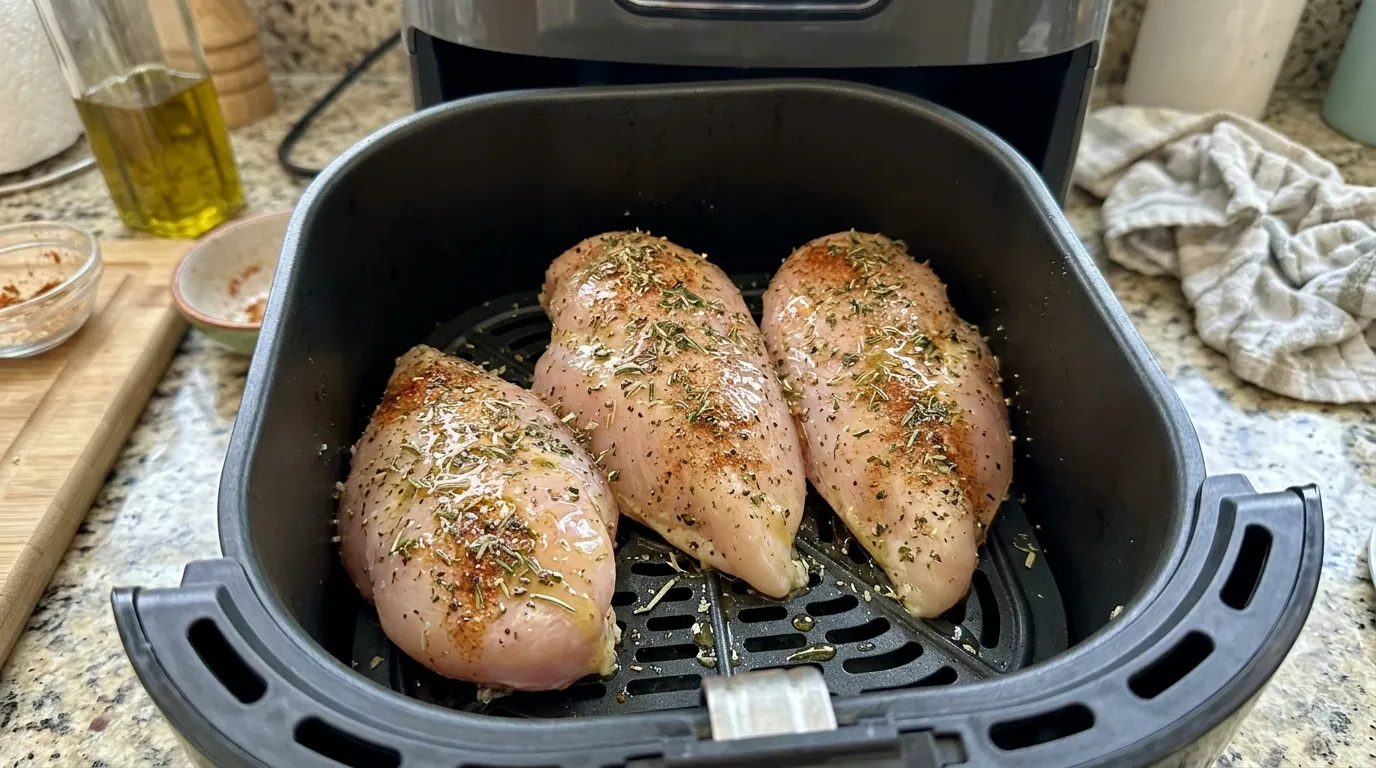
Achieving consistent results with an air fryer chicken breast comes down to preparation mechanics rather than complex culinary techniques. Follow this structured workflow:
- Level the Thickness: Place the chicken breasts between two sheets of parchment paper or plastic wrap. Use a meat mallet or rolling pin to pound the thicker end until the entire cutlet maintains a uniform thickness of approximately 0.75 to 1 inch.
- Surface Prep and Dry Brining: Pat the meat completely dry with paper towels. For optimal juiciness, salt the chicken 30 to 45 minutes prior to cooking and leave it uncovered in the refrigerator. This draws surface moisture out, dissolves the salt, and reabsorbs it into the protein structure, altering protein strands to retain more moisture during cooking.
- Oil and Seasoning Layer: Rub each breast with roughly 1 teaspoon of avocado or light olive oil. Apply dry seasonings—such as smoked paprika, garlic powder, onion powder, black pepper, and dried oregano. Avoid heavy sugar-based rubs, which burn quickly under direct convection elements.
- Cooking Parameters: Preheat the air fryer to 380°F (193°C) for 3 minutes. Arrange the breasts in a single layer with at least 0.5 inches of clearance around each piece. Cook for 9 to 12 minutes (depending on thickness), flipping at the halfway point.
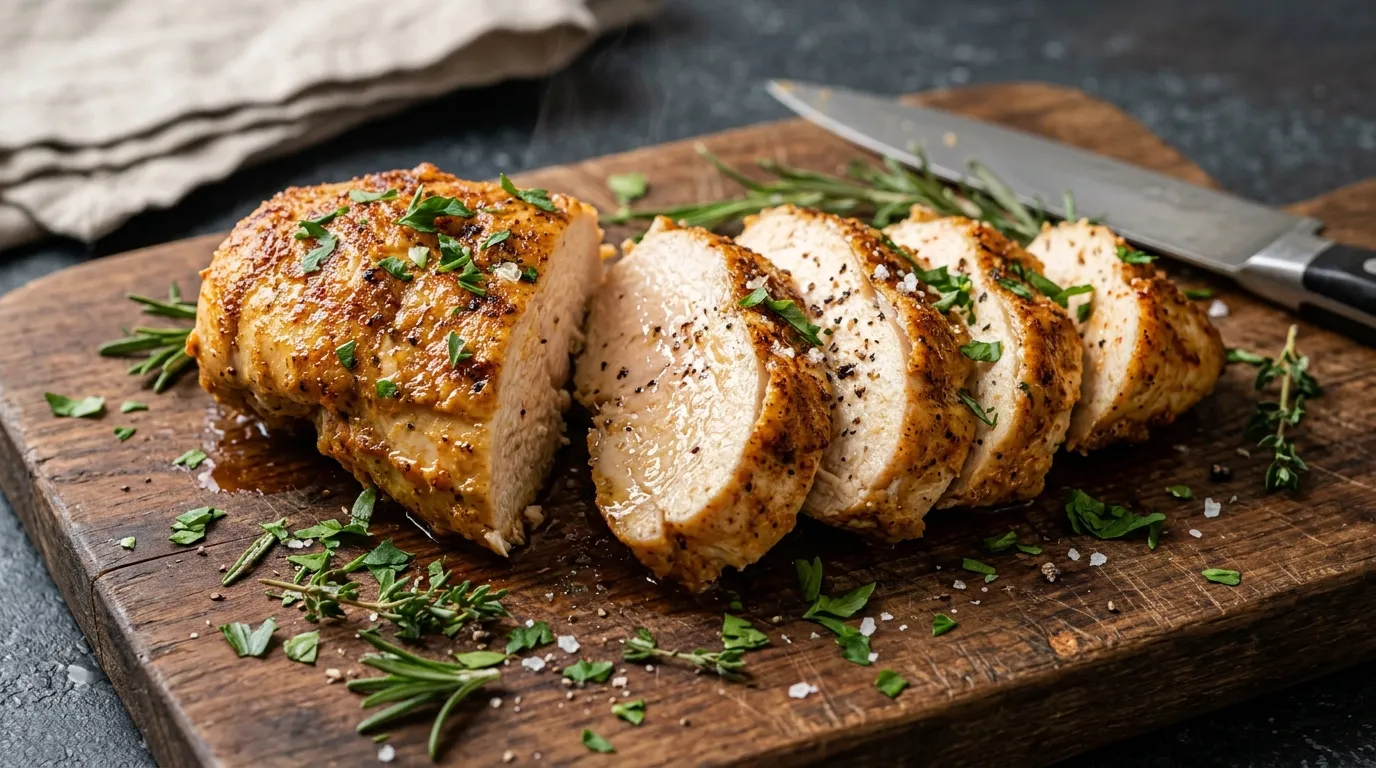
- The Rest Period: Transfer the meat immediately to a cutting board and tent it loosely with foil for 5 minutes before slicing. Cutting into the breast straight from the basket causes cellular pressure to dump essential juices onto your board.
Common Pitfalls That Lead to Dry or Rubbery Meat
Even with convection efficiency, small errors can compromise texture. Address these three frequent failure points:
1. Overcrowding the Basket
Air fryers do not fry; they circulate superheated air. Placing cutlets too close together or overlapping them creates dead zones where moisture pools and turns to steam. Instead of a golden, seasoned crust, the chicken takes longer to cook and develops a pale, rubbery exterior. Always cook in batches if preparing more than two large cutlets.
2. Cooking by the Clock Instead of Internal Temperature
Cooking charts offer rough guidelines, not absolutes. A 6-ounce breast and a 10-ounce breast cook at wildly different rates. Relying on an arbitrary timer often results in overcooked meat. Use an instant-read digital probe thermometer inserted horizontally into the thickest section. Pull the chicken when the digital display reads 160°F (71°C); the internal temperature will climb to 165°F (74°C) during the resting phase.
3. Excessive Cooking Temperatures
Blasting the air fryer at 400°F (204°C) chars the seasoning and contracts outer muscle fibers before the center finishes cooking. While 400°F works well for chicken wings or skin-on thighs that have protective fat layers, lean breast tissue performs best between 375°F and 380°F (190°C and 193°C).
Batch Cooking and Meal Prep Storage
If you use air fryer chicken breast for weekly meal prep, cooling and storage methods dictate how well the meat reheats later in the week.
- Cooling Protocol: Let the cooked, rested chicken cool to room temperature for no more than 60 minutes before slicing or sealing. Storing steaming hot chicken in airtight containers traps moisture, softening the seasoned crust and encouraging bacterial growth.
- Storage Medium: Glass airtight containers preserve flavor and texture better than thin plastic wrap. Sliced chicken holds well under refrigeration (below 40°F/4°C) for up to 4 days.
- Reheating Without Drying Out: Avoid high-power microwave reheating whenever possible. Instead, return the chicken to a preheated air fryer at 350°F (175°C) for 3 to 4 minutes. A light mist of water or broth before reheating preserves moisture balance.
Frequently Asked Questions
Should I flip chicken breast halfway through in an air fryer?
Yes. Although air circulates beneath perforated baskets, the primary heating element sits above the food. Flipping the breast halfway through cooking ensures balanced crust formation and prevents the bottom side from becoming soggy from rendering juices.
How long does an 8-ounce chicken breast take at 380°F?
An 8-ounce chicken breast pounded to an even 0.75-inch thickness typically cooks in 10 to 12 minutes at 380°F (193°C). Thicker, unpounded cuts may require 14 to 16 minutes. Always verify with an instant-read thermometer rather than relying purely on time.
Can you cook frozen chicken breast directly in the air fryer?
While possible, it is not recommended for optimal texture. Cooking directly from frozen leads to uneven results: the outer edges overcook and turn leathery before the center safely thaws and cooks through. For best results, thaw the chicken completely overnight in the refrigerator before seasoning and air frying.