Disclosure: ClearPick Digest is supported by its readers. If you buy through links on this page, we may earn a commission at no extra cost to you. Read our affiliate disclosure.
Executive Summary
- Crisper skin in less time: Convection heat circulates dry air around the entire surface, yielding restaurant-grade crispy skin in 40 to 45 minutes—roughly 20% faster than a conventional oven.
- Skip the aluminum foil: Wrapping a potato in foil traps escaping moisture and steams the skin; cooking bare directly on the basket grate ensures a crisp exterior and a fluffy interior.
- Target the target temperature: An internal reading between 205°F and 210°F (96°C–99°C) indicates that the starches have completely gelatinized, eliminating dense or gummy centers.
The Science of the Perfect Air Fryer Potato
Achieving an exceptional air fryer baked potato requires understanding starch structure and surface moisture. Standard high-starch varieties, particularly Russet (Idaho) potatoes, remain the undisputed standard for baking. Russets possess high amylose starch levels, which separate into light, floury flakes upon heating. Low-starch waxy varieties, such as red-skinned potatoes, hold their shape and yield a gluey, wet crumb when baked whole.
Surface preparation dictates skin texture. When washed potatoes retain exterior moisture, the air fryer must spend the initial 10 minutes evaporating that surface water before browning can begin. Thoroughly drying each tuber with a clean lint-free cloth or paper towel accelerates the Maillard reaction.
Piercing the skin 6 to 8 times with a fork is not merely traditional—it creates controlled vent points. As the water inside the potato turns to steam, pressure builds. Without ventilation holes, the skin can burst, releasing starch unevenly and marring the final texture.
Step-by-Step Cooking Technique and Temperature Calibration
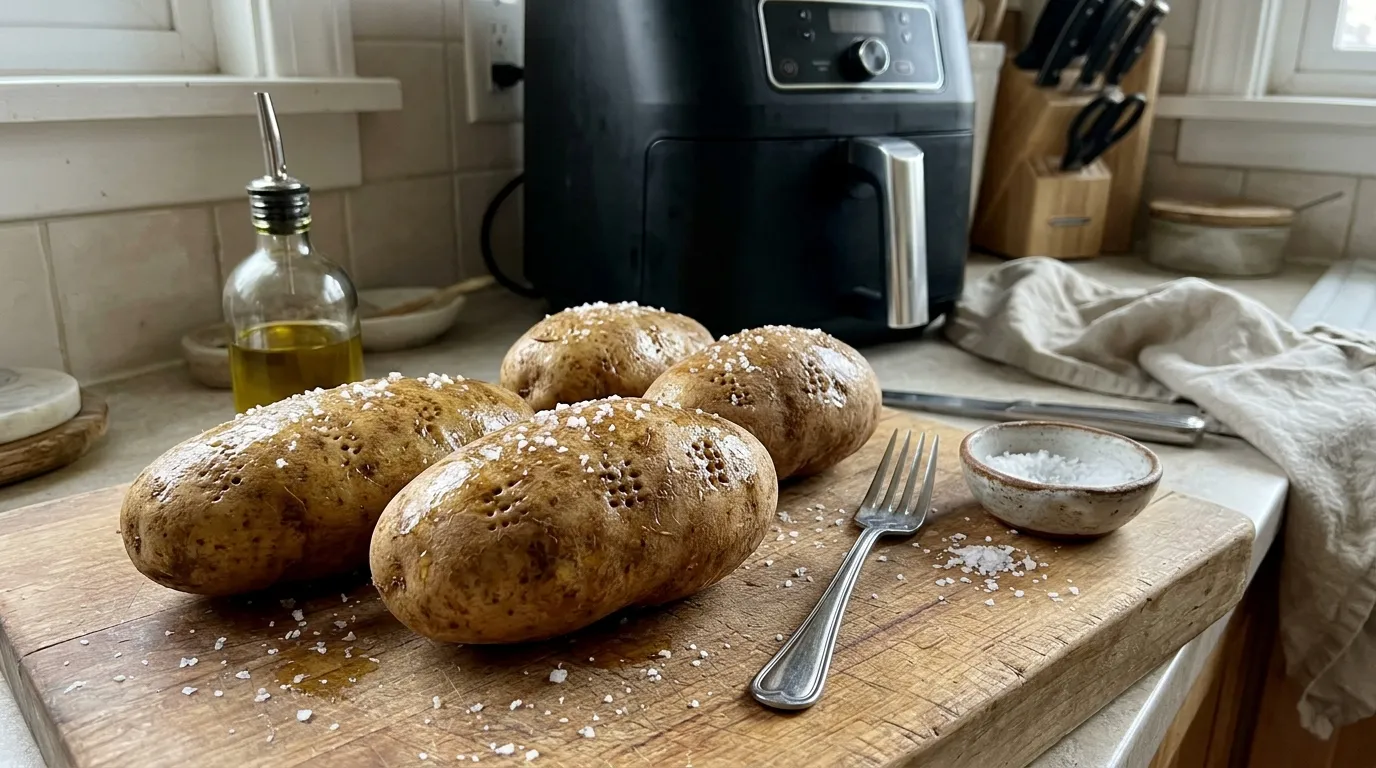
Cooking a medium-to-large Russet potato (approx. 8 to 10 ounces) requires a balance of high heat and adequate core penetration. Setting the appliance too hot scorches the skin before the center softens, while low heat leaves the skin leathery.
- Clean and dry: Scrub the potato under cold running water to remove dirt. Dry completely with a kitchen towel.
- Pierce: Prick the potato several times across all sides using a fork to allow steam expansion.
- Coat the exterior: Rub the skin with half a teaspoon of neutral, high-smoke-point oil (such as avocado oil or refined olive oil). Avoid unrefined extra-virgin olive oil, which can burn and produce acrid flavors during extended 400°F cooking cycles.
- Season generously: Roll the oiled potato in coarse kosher salt or flaky sea salt. The oil acts as a binder, and the salt draws out surface moisture while seasoning the skin.
- Air fry at 400°F (200°C): Place the potato directly in the air fryer basket without parchment paper or foil. Cook for 40 to 45 minutes, flipping halfway through to promote even heat exposure.
- Test for doneness: Insert a digital probe thermometer into the center. The potato is ready when the reading reaches 205°F to 210°F. If testing without a thermometer, a metal skewer or paring knife should slide into the center with zero resistance.
Common Mistakes That Ruin Texture
Even straightforward appliance cooking can falter without attention to small details. Avoid these common missteps:
- Wrapping in aluminum foil: Foil traps steam against the skin. Instead of frying the skin crisp, it steams the potato, resulting in a soft, wrinkled, soggy jacket. Cook unshielded.
- Overcrowding the basket: Air fryers rely entirely on rapid airflow. Stacking potatoes or packing four large Russets tightly against each other blocks air currents, leading to uneven cooking and cold spots. Maintain at least a half-inch gap between potatoes.
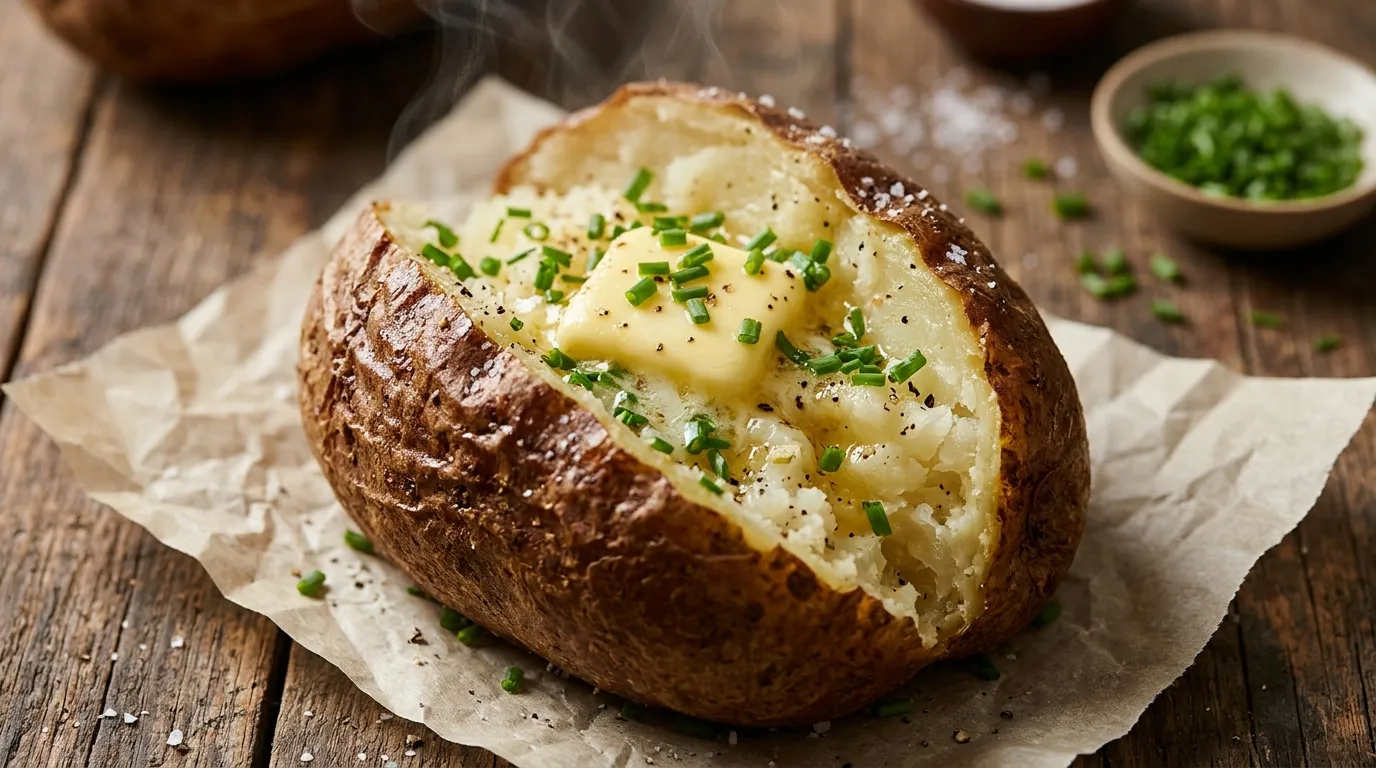
- Slicing instead of tearing open: Cutting a hot baked potato with a chef’s knife compresses the delicate, steam-fluffed starch granules, creating a flat, dense texture. Instead, score a shallow cross on top, then press both ends inward with a clean towel to pop the interior open. Finish by fluffing gently with a fork.
- Under-salting the skin: Potato skin requires a high concentration of salt to contrast against the neutral, earthy starch beneath it. Coarse granules stick better than fine table salt and provide a satisfying crunch.
Energy Efficiency and Small-Space Kitchen Benefits
Baking one or two potatoes in a full-sized 3,000-watt electric range requires heating several cubic feet of empty air and preheating for up to 15 minutes. In contrast, a typical air fryer draws 1,400 to 1,800 watts, heats up in under two minutes, and isolates the thermal output to a compact, enclosed chamber.
For studio apartments, dorms, and micro-kitchens, air frying eliminates the unwanted ambient heat generated by conventional ovens—a significant benefit during warmer months. The rapid convection fan also mimics the effects of high-heat commercial convection decks, turning a humble pantry staple into an elevated side dish with minimal utility overhead.
Frequently Asked Questions
Can I make sweet potatoes using the exact same air fryer method?
Yes, but adjustments are needed. Sweet potatoes contain more sugar and moisture than Russets, making them prone to burning on the exterior. Reduce the cooking temperature to 375°F (190°C) and cook for 40 to 50 minutes until soft to the touch.
Why is my air fryer baked potato still hard in the center?
A hard center means the interior starch has not yet gelatinized. Large Russets often need up to 50 to 55 minutes depending on the wattage and heating efficiency of your specific air fryer. Always check with a digital probe thermometer or a wooden skewer before removing.
Can I reheat a cold baked potato in the air fryer?
Reheating a cold baked potato in the air fryer revives the crispy skin that a microwave destroys. Place the leftover potato in the air fryer basket at 350°F (175°C) for 8 to 12 minutes until warmed through to the core.