
Disclosure: ClearPick Digest is supported by its readers. If you buy through links on this page, we may earn a commission at no extra cost to you. Read our affiliate disclosure.
Finding the best compact daypack travel hiking setup requires balancing carry comfort with packability. Whether navigating crowded transit hubs or tackling rocky trail switchbacks, a versatile daypack needs to stash inside a carry-on while carrying water, extra layers, and trail essentials with ease.
Quick Summary Table
| Model | Key Feature | Best For | Price Tier |
|---|---|---|---|
| Osprey Daylite Plus | Padded back panel & harness compatibility | All-around trail & town utility | Mid-range |
| Matador Freefly16 | Fully waterproof seam-taped build | Ultralight packable travel | Premium |
| REI Co-op Flash 22 | Lightweight breathable suspension | Dedicated day hikes & scramble runs | Budget-friendly |
| Mystery Ranch In and Out 19 | Abrasion-resistant Cordura construction | Rough terrain & heavy loads | Mid-range |
| Patagonia Atom Tote Pack 20L | Removable tech sleeve & sleek silhouette | Minimalist city-to-trail travel | Mid-range |
Osprey Daylite Plus

The Osprey Daylite Plus is a benchmark crossover pack designed for short day hikes, carry-on transit, and daily commuting. Built with a ventilated die-cut foam back panel, it offers significantly more structure than standard packable daypacks without adding excessive bulk. Dual stretch mesh side pockets accommodate standard water bottles, while an interior multi-functional sleeve holds either a hydration bladder on trail mornings or a compact laptop at the airport terminal.
Pros
- Semi-structured foam back panel provides superior carrying support compared to unstructured bags
- Integrates seamlessly with larger Osprey travel luggage as an attachable front bag
- Dual side mesh pockets hold hydration securely on uneven terrain
Cons
- Does not pack down as flat as purely frameless, packable nylon packs
- Mesh side pockets can feel tight when the main compartment is completely stuffed
Verdict: The top choice for travelers who want true hiking-grade ergonomics and back ventilation in an airline-friendly size.
Matador Freefly16
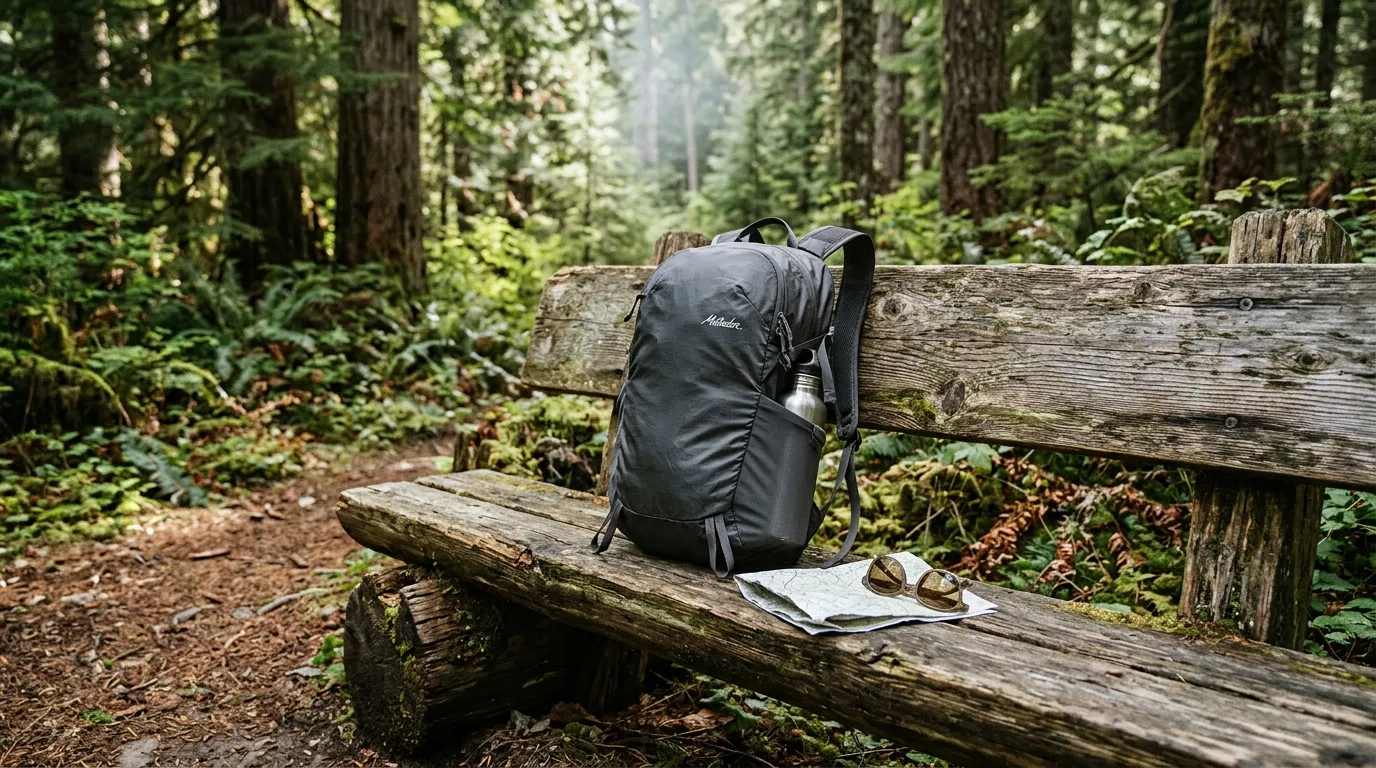
The Matador Freefly16 targets ultralight globetrotters who demand weather protection without weight penalties. Constructed from reinforced, seam-sealed nylon with water-resistant sealing zippers, it can withstand sustained downpours on open mountain ridges. When empty, it packs down into an included compression sack small enough to disappear inside a personal-item luggage pocket.
Pros
- Exceptional water resistance keeps gear dry in unexpected storms
- Compresses down to the size of a lemon for effortless packing inside larger luggage
- Breathable mesh shoulder straps distribute lightweight loads comfortably
Cons
- Completely frameless design requires thoughtful packing to avoid items poking your back
- Thin technical fabrics require careful handling around sharp rock scrambles
Verdict: An unbeatable packable solution for wet-weather adventures and minimalists packing strictly out of a single carry-on bag.
REI Co-op Flash 22
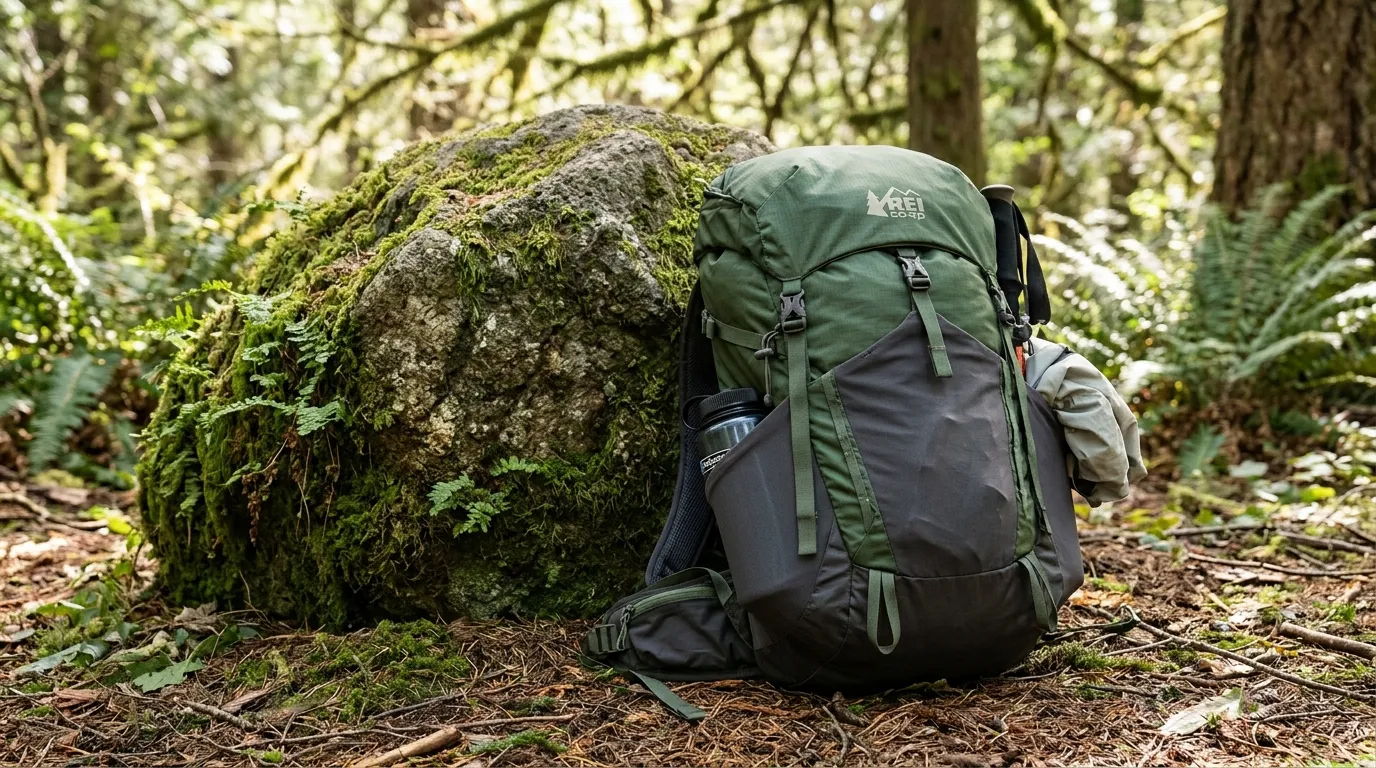
The REI Co-op Flash 22 balances weight, functionality, and storage efficiency. Featuring a top-loading drawcord lid, accessible stash pockets, and an easily removable back pad that doubles as a trail sit pad, this pack punches well above its weight class on the trail. Its contouring shoulder straps and minimalist waist belt provide stability without snagging when boarding trains or sliding into overhead bins.
Pros
- Removable back pad provides dual functionality as an insulated camp seat
- Quick-cinch top access makes grabbing weather layers fast and intuitive
- Ergonomic strap shaping prevents chafing on warm summer hikes
Cons
- Drawcord closure is less water-tight than zippered designs during driving rain
- Minimalist waist strap offers stability rather than meaningful load transfer
Verdict: The best pure hiking pack on the list that remains light enough to flatten inside primary travel bags.
Buyer’s Guide: Choosing the Best Compact Daypack for Travel and Hiking
Selecting the ideal crossover daypack comes down to how you distribute weight, pack your luggage, and handle trail wear:
Capacity and Pack Size
For dual-purpose travel and hiking, capacities between 16 and 22 liters offer the sweet spot. A bag under 16 liters often struggles to fit a shell jacket, food, and water simultaneously. Anything over 24 liters adds structural harnesses and rigid frame stays that make it difficult to roll or lay flat inside a primary travel duffel.
Structure vs. Packability
Decide whether you prioritize breathability or packed volume:
- Packable Bags: Often lack back panels and roll into their own internal pouches. They save massive amounts of suitcase space but require soft items (like a fleece) placed against the back panel to prevent hard objects from poking you.
- Semi-Structured Bags: Feature light foam backing and contoured harnesses. They take up more space in your main luggage but provide unmatched comfort during all-day summit treks in warm weather.
Weather Resistance and Maintenance
Outdoor travel exposes gear to dust, salt air, and sudden precipitation. Look for nylon weaves treated with durable water repellent (DWR) coatings or seam-taped shells if you frequently hike in humid, rain-prone climates. For routine maintenance, empty all compartments after travel, brush off dried trail debris with a soft bristle brush, and hand-wash in cold water with mild detergent to preserve fabric coatings—never throw technical daypacks into high-heat machine dryers.
Please note that product specifications, availability, and pricing are subject to change over time, so be sure to check the manufacturer’s official page for the most up-to-date details before making a purchase.